Updated on

The key moments of the book, in order, one picture at a time.
Exodus 2:1-10
Moses in the basket
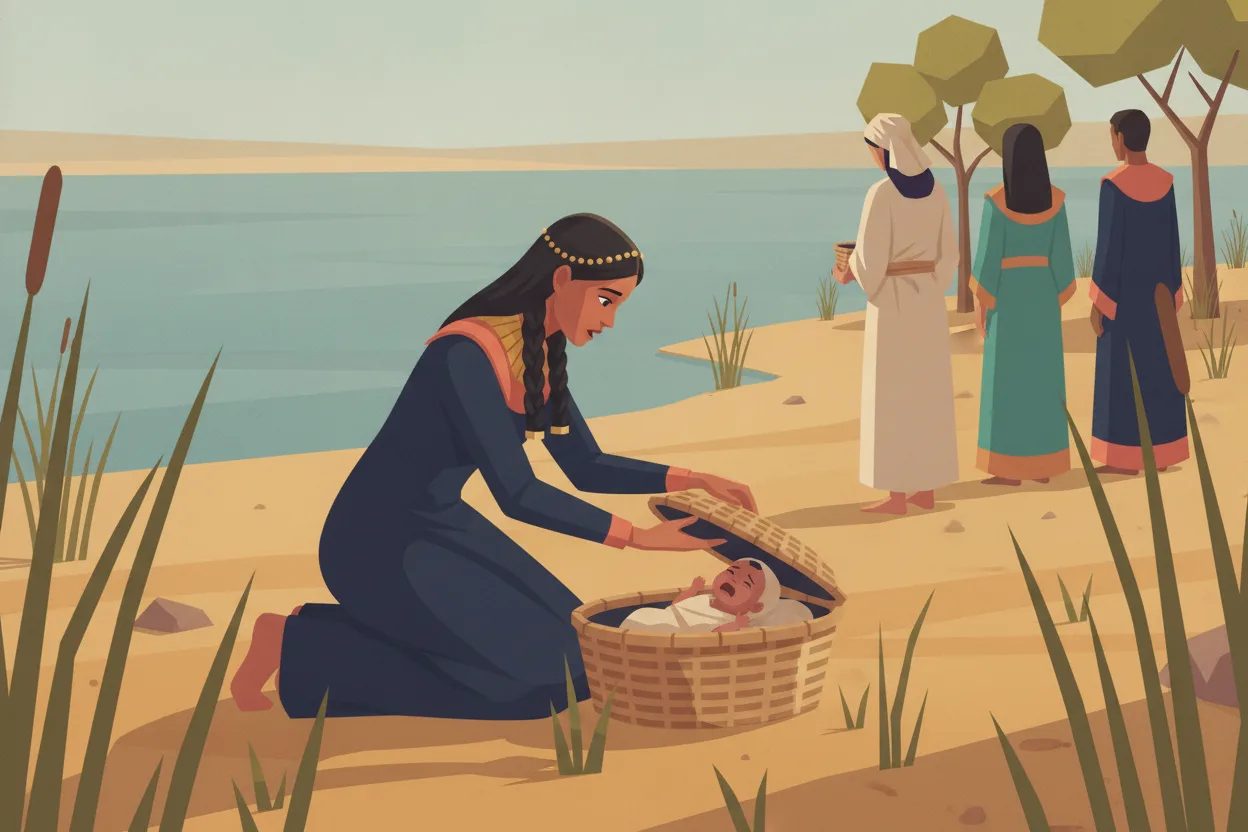
In Egypt, Pharaoh is afraid of the Hebrews. He orders that all their baby boys be killed. A woman from the tribe of Levi has just had a son. She hides him for three months, but then she can no longer keep him secret.
She takes a basket, covers it with tar, and places the child inside. She sets it on the river, among the reeds. Miriam, the older sister, stays at a distance to watch.
Pharaoh's daughter comes to bathe. She sees the basket, opens it, and finds the crying baby. "This is a Hebrew child," she says, moved. Miriam comes closer and offers, "Shall I go and find a Hebrew nurse for you?" The princess agrees. It is the baby's own mother who comes back to care for him.
The child grows up at court. The princess names him Moses, "because I drew him out of the water," she says. He will live like a prince, but his heart will stay bound to his people.
Exodus 3:1-6
The burning bush
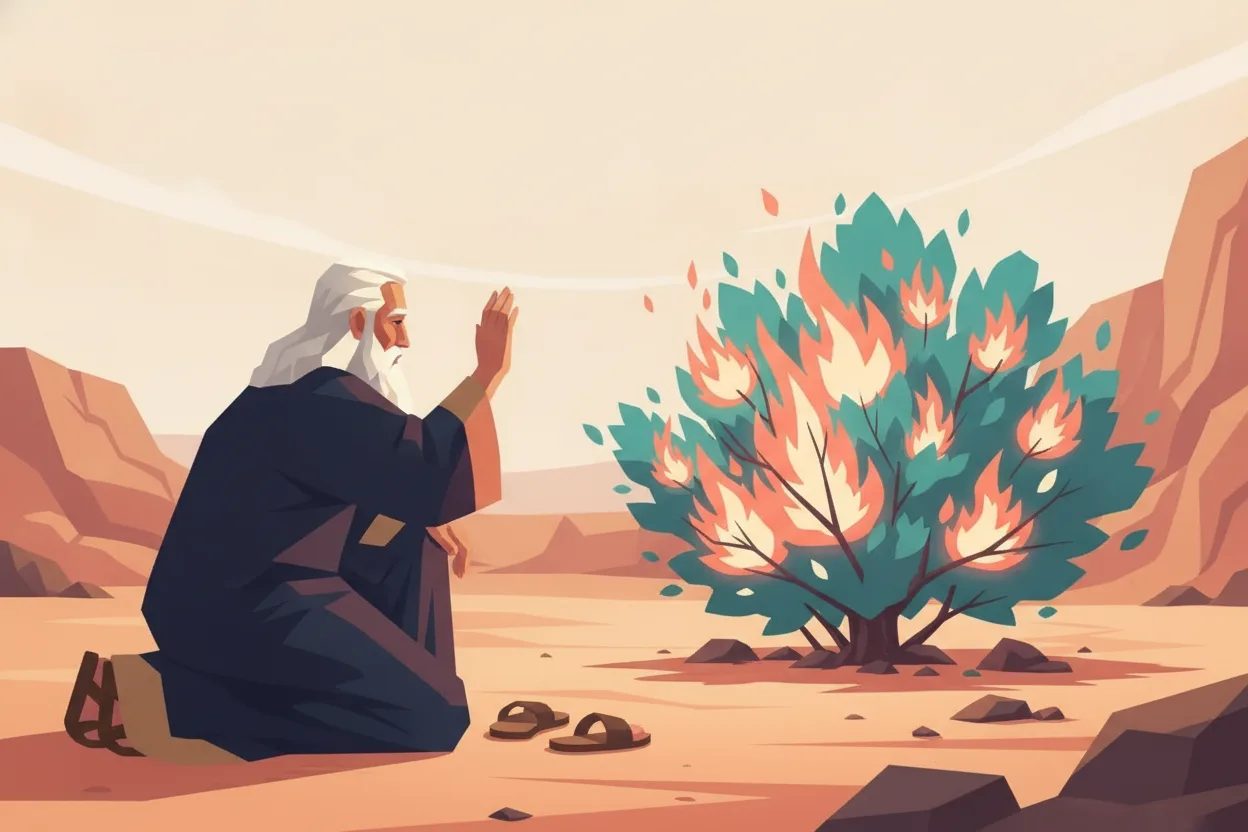
Moses tends the sheep of his father-in-law Jethro, in the desert. One day, he leads the flock near the mountain of Horeb. Suddenly, he sees a bush on fire. But the bush does not burn up, it stays whole. Moses comes closer, amazed.
A voice calls him from inside the fire: "Moses! Moses!" He answers, "Here I am." The voice says, "Do not come closer. Take off your sandals, for this is holy ground. I am the God of your father, the God of Abraham, Isaac, and Jacob."
Moses hides his face. He is afraid to look at God. That day, in the silence of the desert, a great mission begins. God has seen the suffering of his people in Egypt. He will soon speak to Moses about their freedom.
Exodus 7:14-21
The plague of blood
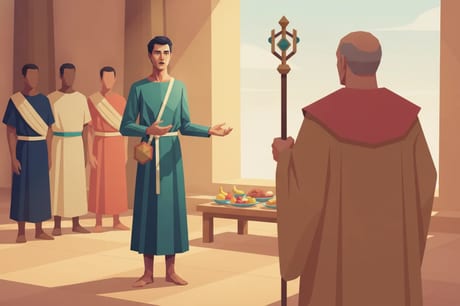
The Lord speaks to Moses. He says, "Pharaoh's heart remains hard. He refuses to let my people go. Go to him tomorrow morning, by the Nile. Take your staff."
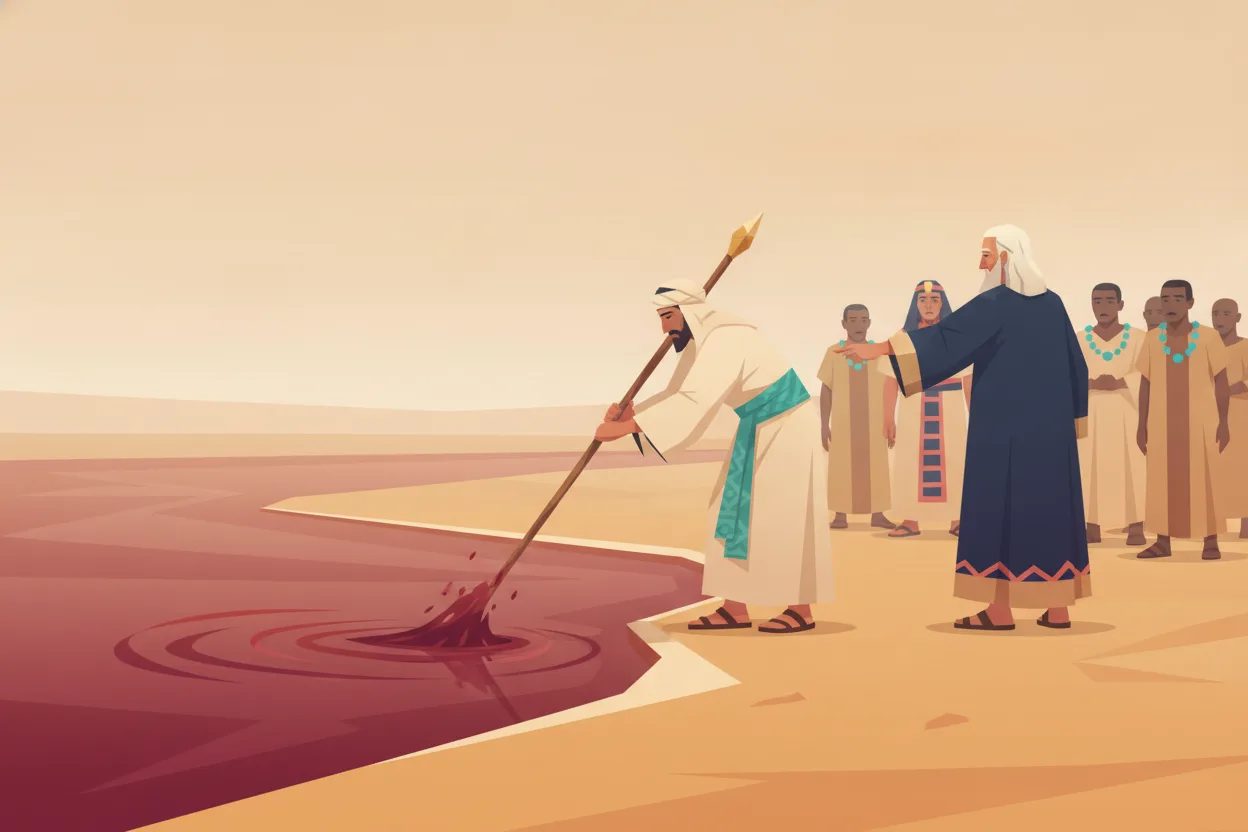
Moses and Aaron come before Pharaoh. Moses declares, "Thus says the Lord, the God of the Hebrews: let my people go! Since you will not listen, watch this." Aaron lifts his staff and strikes the water of the river, in front of Pharaoh and his servants.
At once, the Nile turns red like blood. The fish die. The water smells foul, no one can drink it anymore. All over Egypt, even in jars of wood and stone, the water turns to blood. But the Egyptian magicians do the same thing with their secret tricks. Pharaoh's heart does not soften. He turns his back and goes home, without listening to anything.
Exodus 12:21-30
The first Passover night
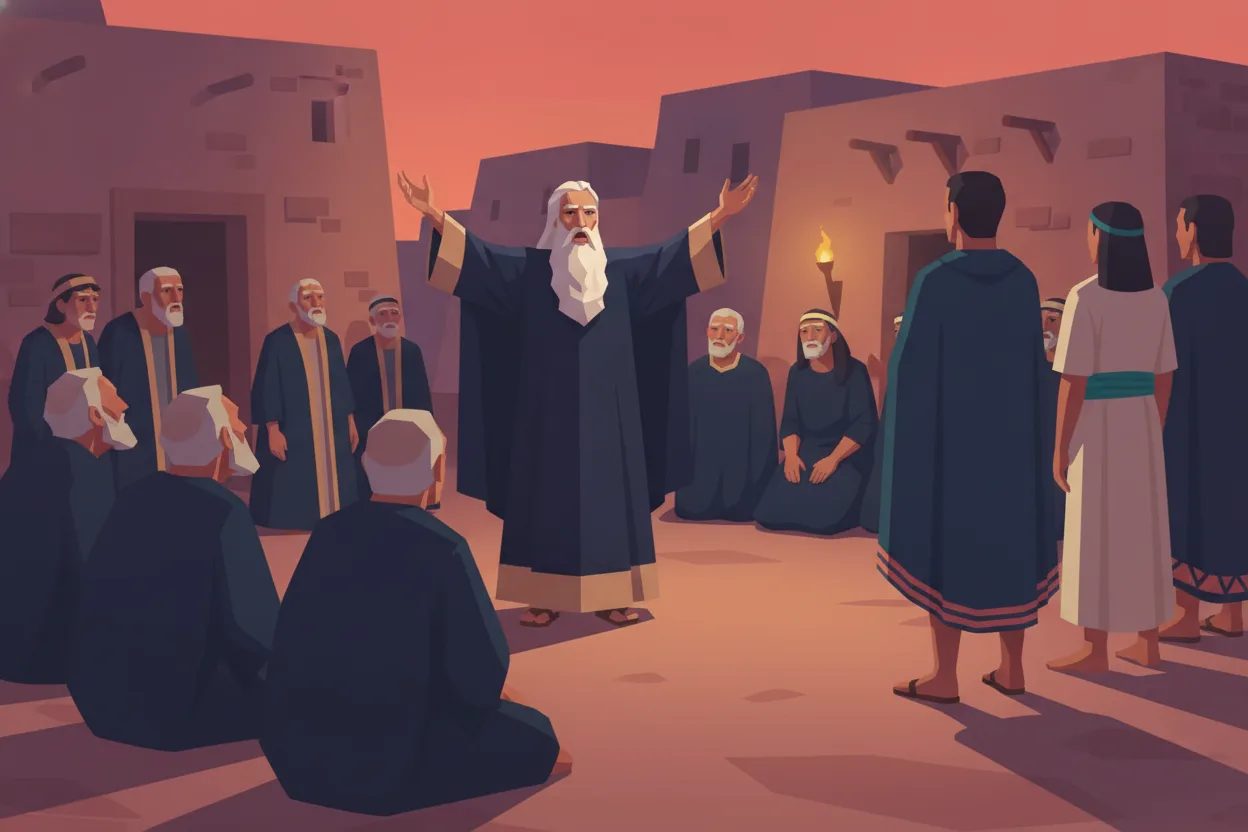
Moses gathers the elders of Israel. He speaks quickly, for night is coming. "Take a lamb for each family," he says. "Slaughter it. Dip a branch of hyssop in its blood. Mark the top and both sides of your doorframe."
He adds, "Stay inside until morning. The Lord will pass through the land to strike the Egyptians. But he will see the blood on your doors, and he will pass over you. No harm will enter your house." The people listen, bow down, and obey without question.
In the middle of the night, a great cry rises throughout all of Egypt. Every Egyptian household mourns a dead firstborn, from the son of Pharaoh to the son of the prisoner. Pharaoh rises, still in the dark. He calls Moses and Aaron and finally tells them, "Go. Go and serve your God, you and your people. Leave quickly, and bless me too."
Exodus 12:37-42
Israel leaves Egypt
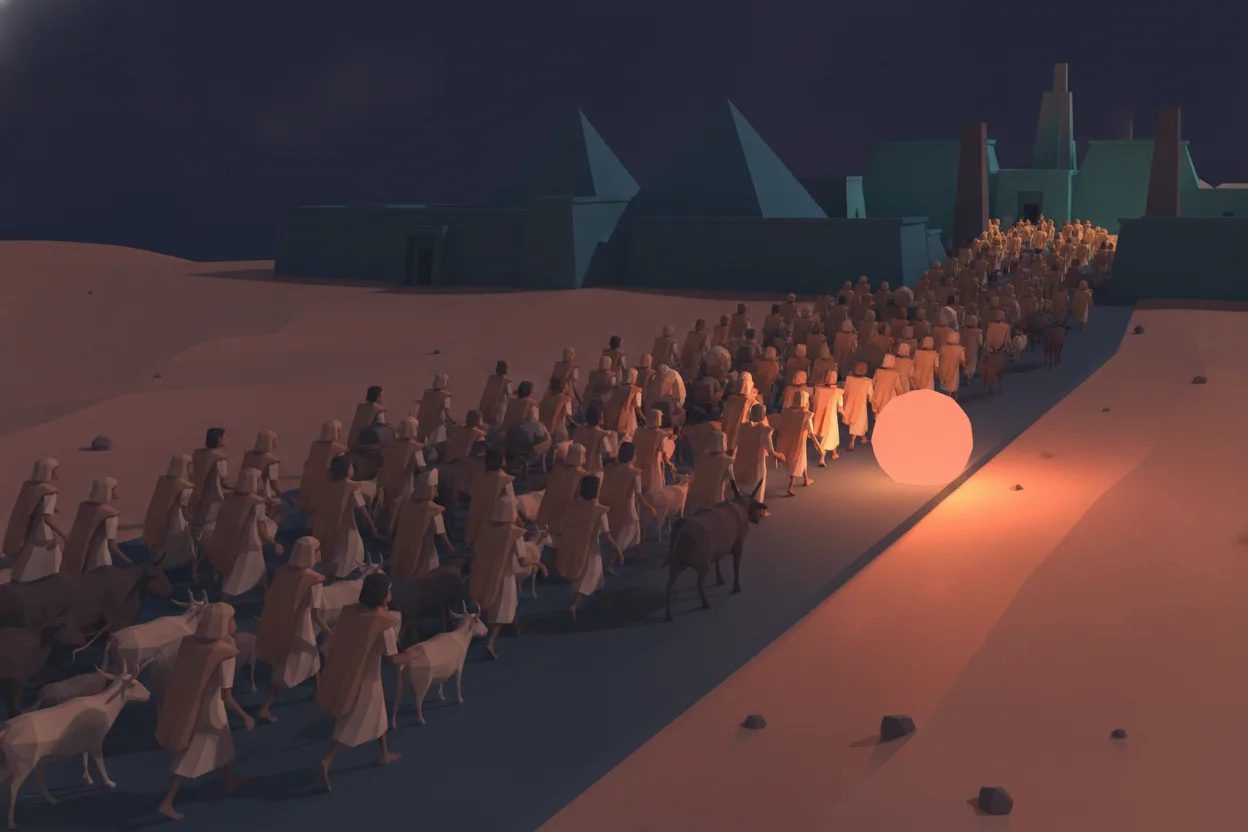
At last, the great day arrives. The Hebrews leave Rameses, the city in Egypt where they suffered so much. There are about six hundred thousand men, not counting the women and children. A huge flock of sheep and cattle travels with them. It is an entire people leaving, not just a few families.
They have not had time to let their bread rise. So they carry flat dough, without yeast, and bake it later along the way. They had lived in Egypt for four hundred thirty years. That night, no one sleeps. It is a night of watching, a night to remember forever, for the Lord has brought them out of slavery.
The people move forward in the darkness, hurried, hearts pounding. Behind them, Egypt and its chains. Ahead of them, the unknown and freedom.
Exodus 14:21-31
Crossing the Red Sea
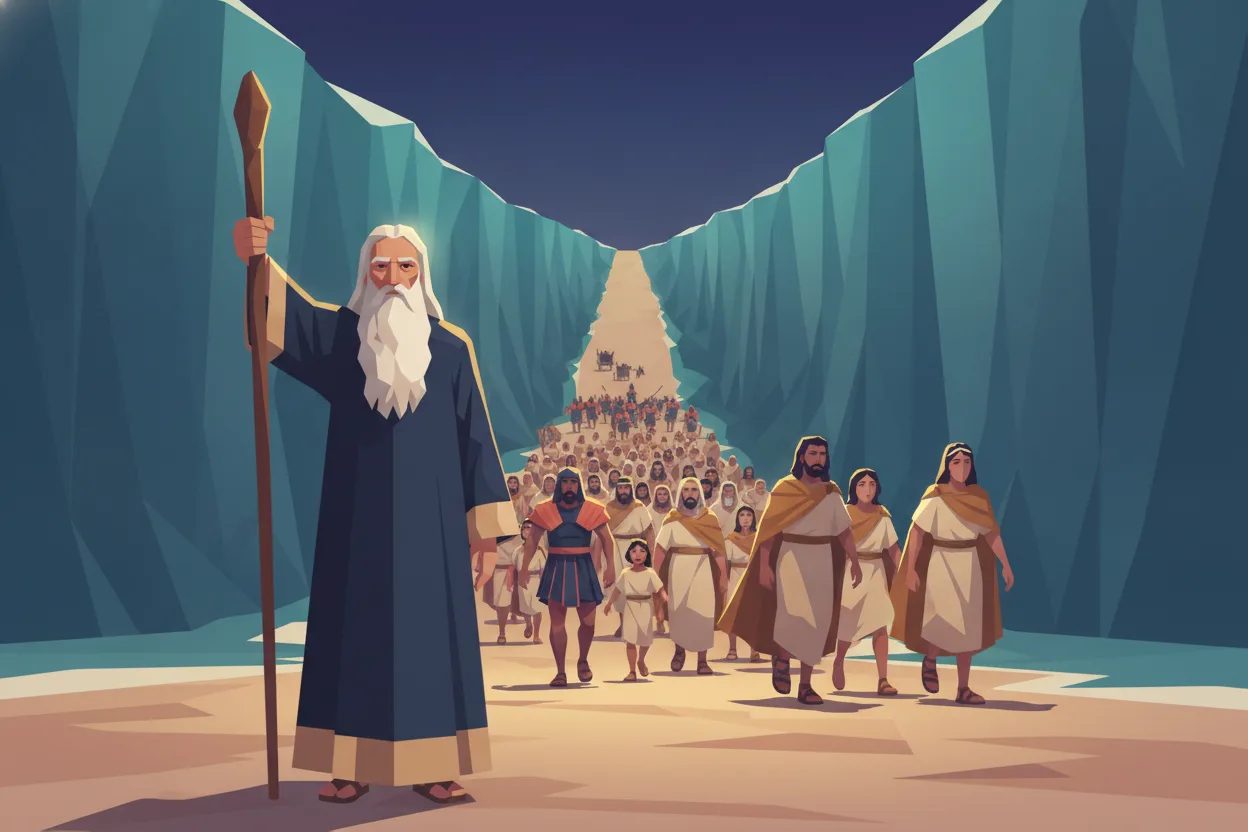
The Egyptians pursue Moses and his people. Ahead of them, the sea. Behind them, Pharaoh's army. The people are afraid.
Moses lifts his staff over the water. A powerful wind blows all night long. The sea splits in two. A wall of water on the right, a wall of water on the left. In the middle, a dry path appears. The children of Israel move forward, step by step, between the two walls of water.
The Egyptian soldiers charge onto the same path, with their chariots and horses. But the chariot wheels sink into the mud. The soldiers panic. "Let's flee!" they cry. "The God of Israel is fighting for them!"
When all the people have reached the other side, Moses stretches out his staff again. The sea closes back up. The water swallows the chariots, the horses, the soldiers. Not a single one survives.
On the far shore, the people look at the calm sea. They understand that God has just saved them.
Exodus 16:13-18
Manna in the desert
In the evening, a wind brings quail. They fall on the camp, all around the tents. People gather many of them. That evening, the whole people eat meat.
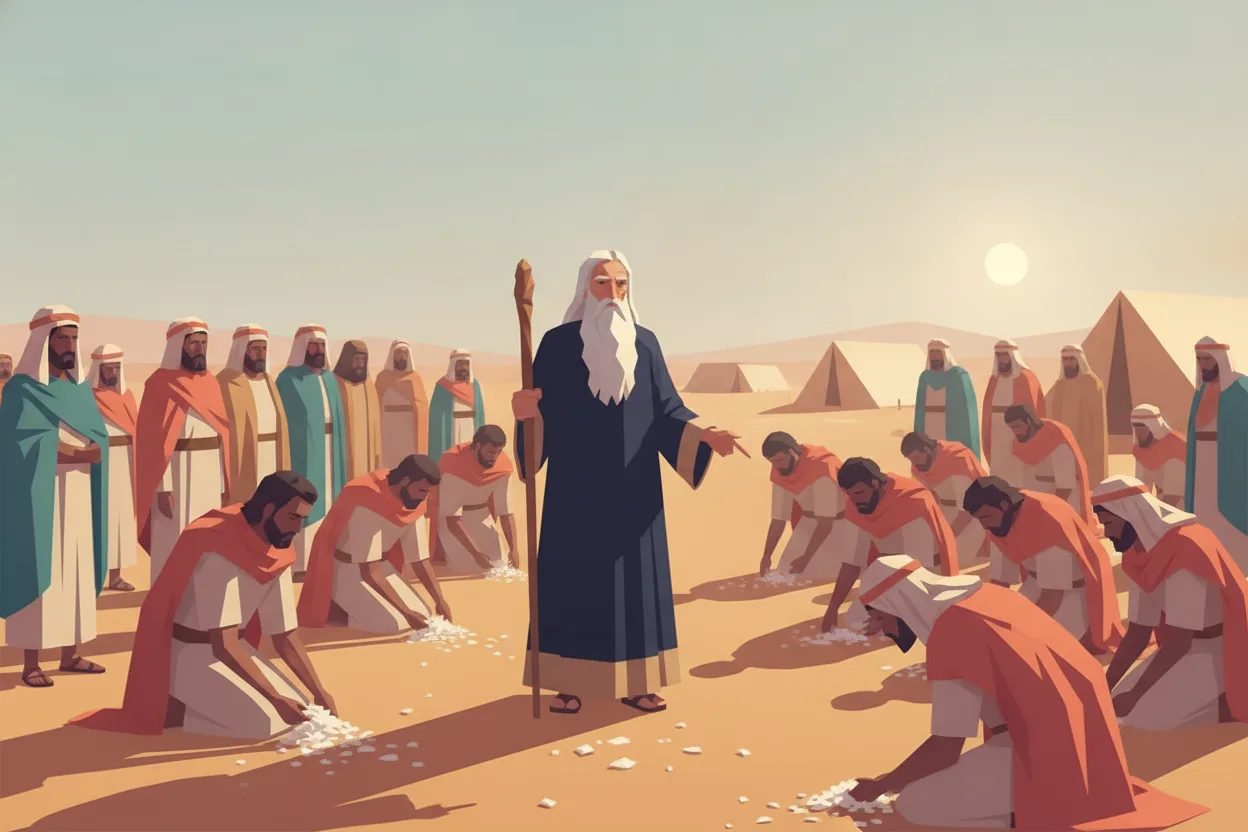
In the morning, dew covers the ground. When it dries, small white flakes remain on the ground, fine as frost. The Israelites look at this and do not understand. "What is it?" they ask.
Moses answers, "It is the bread God gives you to eat." They call this food manna. It tastes like honey cake. God gives a simple rule. Each family must gather just enough for one day, one pot per person. Some gather too much, others too little. But in the evening, when measured, everyone has exactly what they need. No one lacks anything, and no one has too much.
Exodus 19:16-20
God descends on Sinai
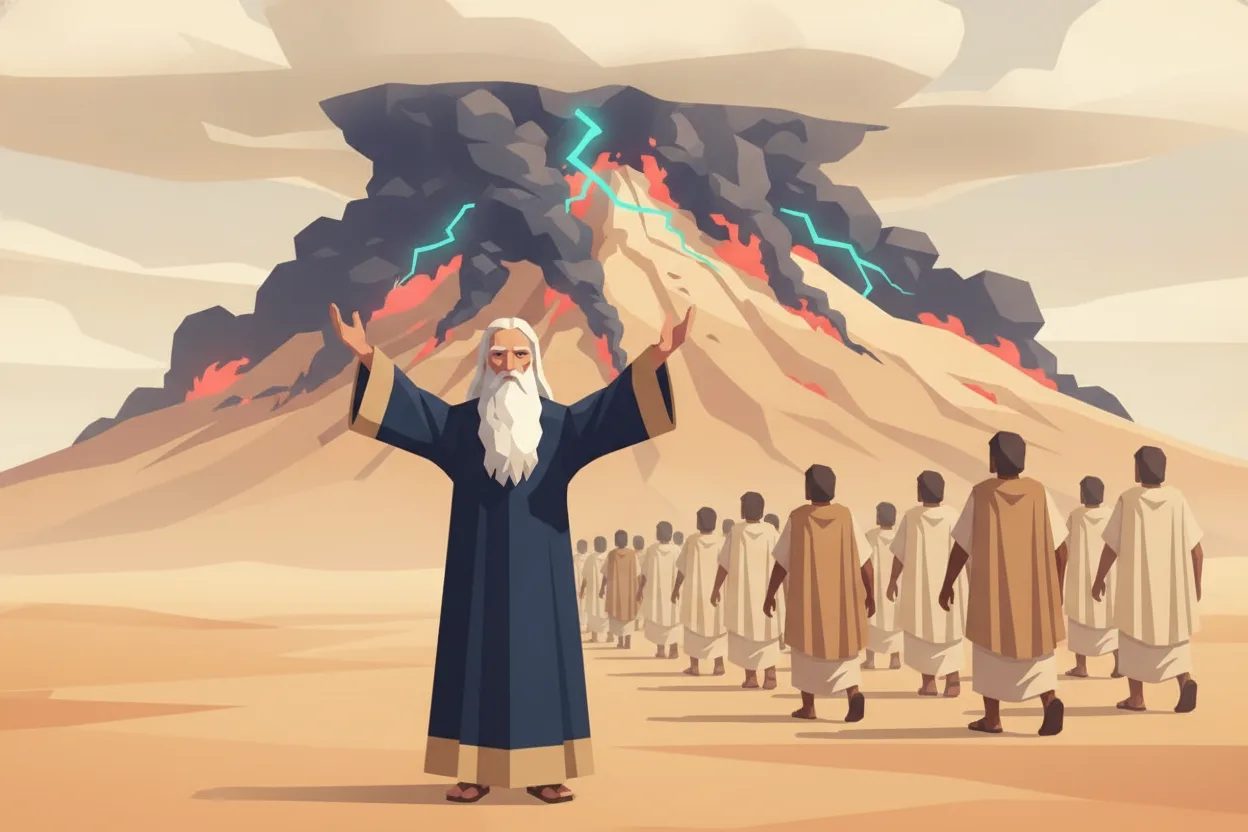
On the third day, the sky changes above Mount Sinai. Thunder rumbles. Lightning tears through the clouds. A trumpet sounds, louder and louder. The people of Israel tremble in their camp.
Moses leads everyone out of the camp, toward the foot of the mountain. Sinai is covered in smoke, for the Lord comes down upon it in fire. The smoke rises like smoke from a furnace. The whole mountain shakes violently. The sound of the trumpet grows louder and louder.
Moses speaks, and God answers him with the voice of thunder. The Lord comes down on the top of Sinai. He calls Moses up the mountain. Moses goes up alone. Below, the people stay at a distance, gripped with fear, before this fire and smoke that announce the presence of God.
Exodus 32:1-6
The golden calf
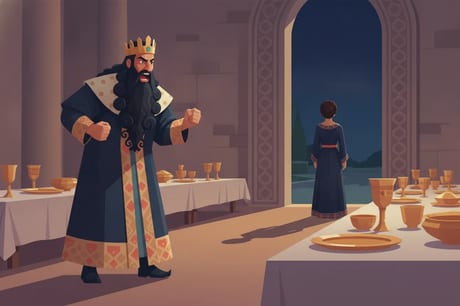
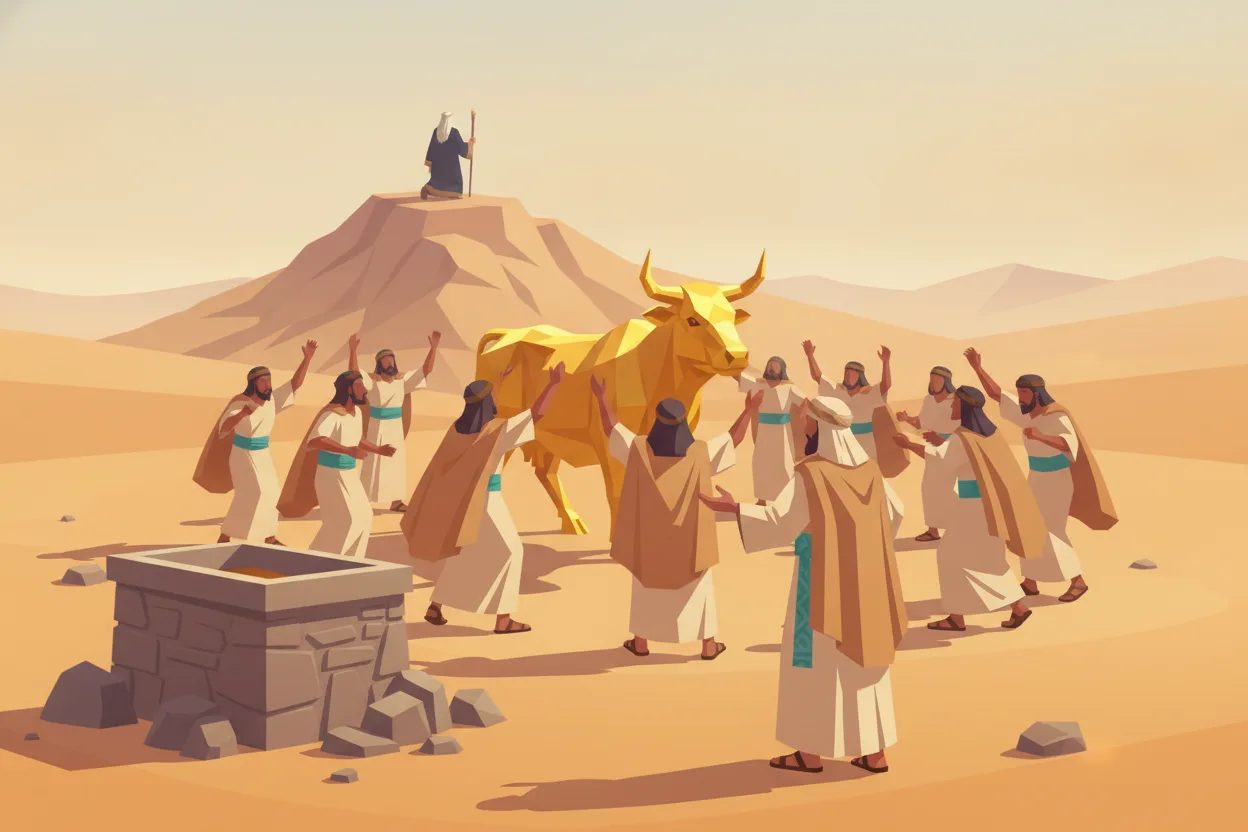
Moses has been on the mountain a long time. Below, the people grow impatient. They gather around Aaron and tell him, "Make us a god who will go before us. As for this Moses, we don't know what has become of him."
Aaron listens. He asks the people to bring their gold earrings. They take them off and give them to him. Aaron melts down the gold. With his hands, he shapes a calf. The people look and cry out, "Here is your god, Israel, the one who brought you out of Egypt!"
Aaron builds an altar before the statue. He announces a feast for the next day. When morning comes, the people offer sacrifices. Then they eat, they drink. They rise up to dance and revel around the golden calf. Meanwhile, Moses is still on the mountain, with God.
Exodus 32:19-20
Moses breaks the tablets
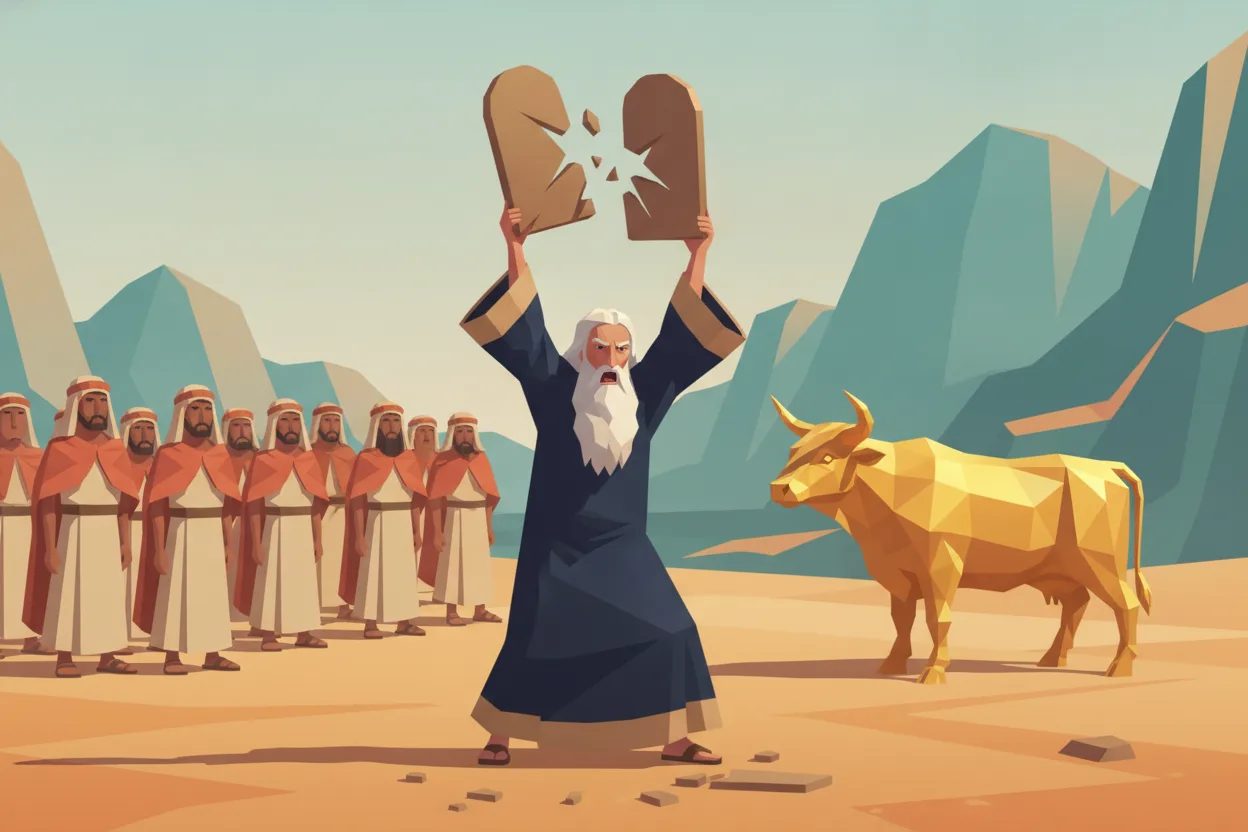
Moses comes down from the mountain. In his hands, he carries two stone tablets. God himself has engraved laws for his people on them.
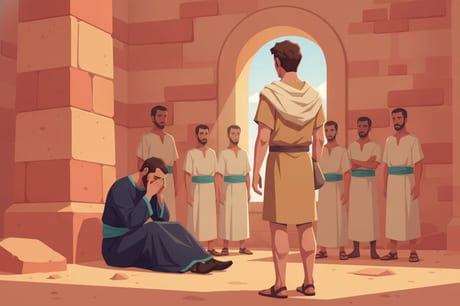
As he approaches the camp, Moses hears shouting and music. He sees the people dancing around a golden statue, a golden calf. The people he brought out of Egypt have already forgotten their God.
A great anger rises in him. He lifts the tablets and throws them violently to the ground. They shatter into a thousand pieces in front of everyone.
Then Moses grabs the golden calf. He throws it into the fire, grinds it to powder. He mixes the powder with water and forces the people to drink it.
"Look at what you have done!" he says, furious.
The broken tablets reveal a sad truth: the covenant between God and his people has just been broken.
Characters in This Chapter

Deliverer of Israel, mediator of the covenant, lawgiver, and prophet who spoke with God face to face

Moses' brother, spokesman before Pharaoh, and first high priest of Israel

King of Egypt who oppressed Israel and hardened his heart against God, ultimately destroyed at the Red Sea

Sister of Moses and Aaron, prophetess who led Israel in worship after the Red Sea crossing

Moses' father-in-law, priest of Midian who advised Moses on leadership and organization

Moses' assistant and military leader who fought the Amalekites and accompanied Moses on Sinai
Places in This Chapter

Land of Israel's slavery and the setting for God's dramatic acts of judgment and redemption through the plagues

Site of Israel's miraculous deliverance where God parted the waters and destroyed Pharaoh's pursuing army