Updated on

The key moments of the book, in order, one picture at a time.
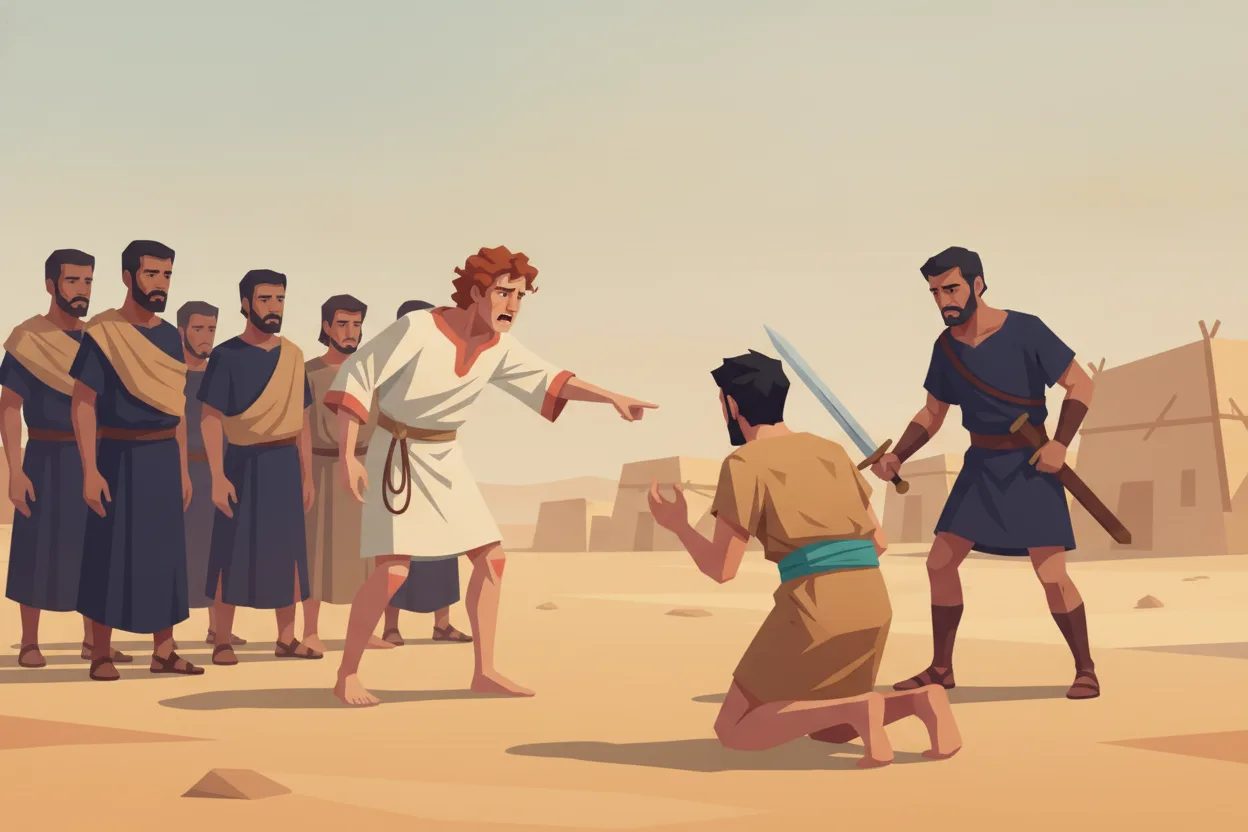
2 Samuel 1:1-16
The Amalekite reports Saul's death
David returns from a battle against the Amalekites. He has been settled in Ziklag for two days. Suddenly, a man comes running, his clothes torn, his head covered with dirt. It is a sign of mourning. He throws himself before David and says: "I have come from the camp of Israel."
David asks what happened. The man answers: "The army fled, many are dead, and Saul and his son Jonathan are dead too." Then he adds, proud of himself: "I was there. Saul was wounded, dying. He asked me to finish him off. I did it. Then I took his crown and his bracelet, and I am bringing them to you."
David and his men begin to weep. But David does not thank this man. He tells him: "You dared to kill the one God had chosen as king! Your own mouth has condemned you." He orders a soldier to strike him dead. The man dies at once.
2 Samuel 2:1-4
David anointed king at Hebron
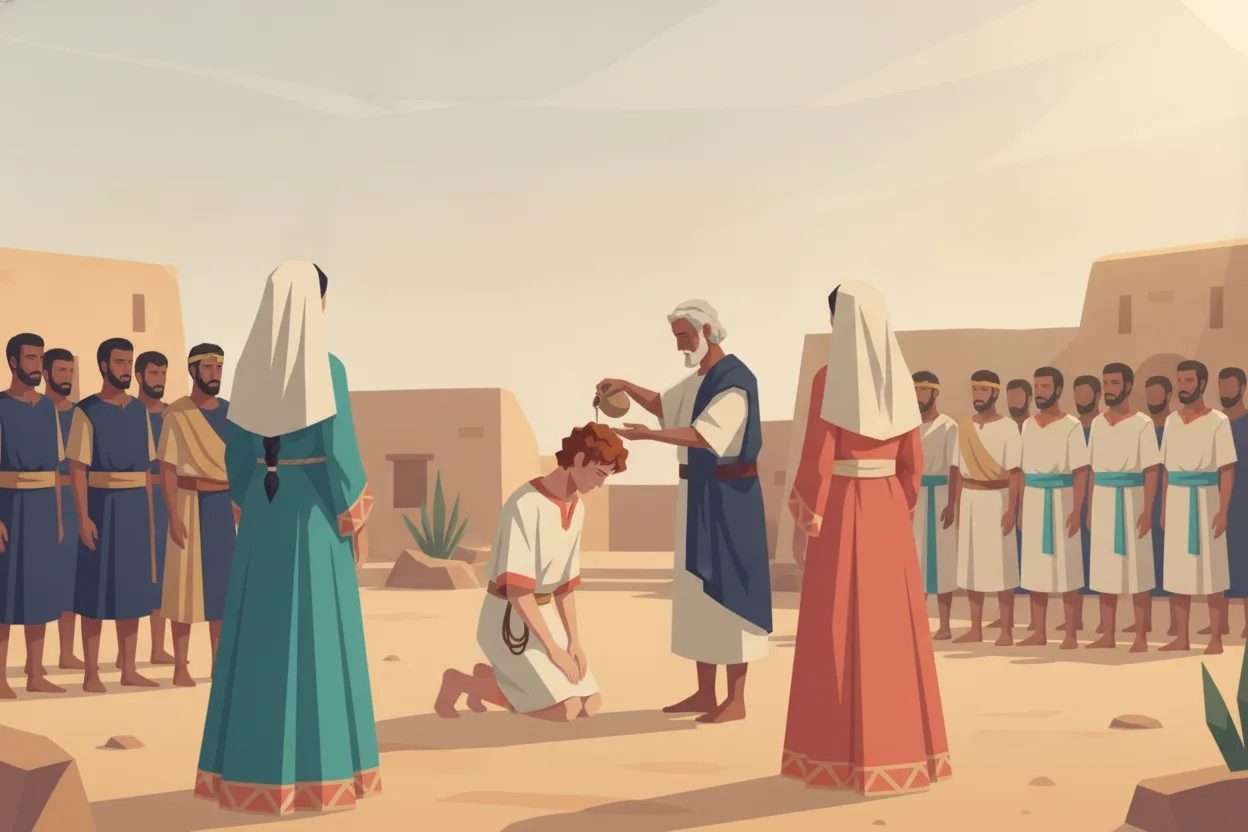
Saul is dead. David finds himself alone, with no king above him. But he does not act without thinking. He prays to God: "Should I go up to a town of Judah?" God answers: "Go up." David asks: "Where?" God says: "To Hebron."
So David sets out. He brings his two wives, Ahinoam and Abigail, and all his men with their families. They settle in Hebron, in the villages around it.
The men of Judah then come to David. They pour oil on his head, in front of everyone. This is the sign: David becomes king of Judah. It is not yet all Israel, but it is a beginning. David also learns that the people of Jabesh-Gilead buried Saul with honor. He sends them a message to thank them for their loyalty.
2 Samuel 3:26-30
Joab kills Abner
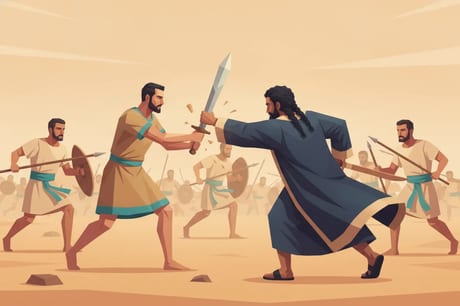
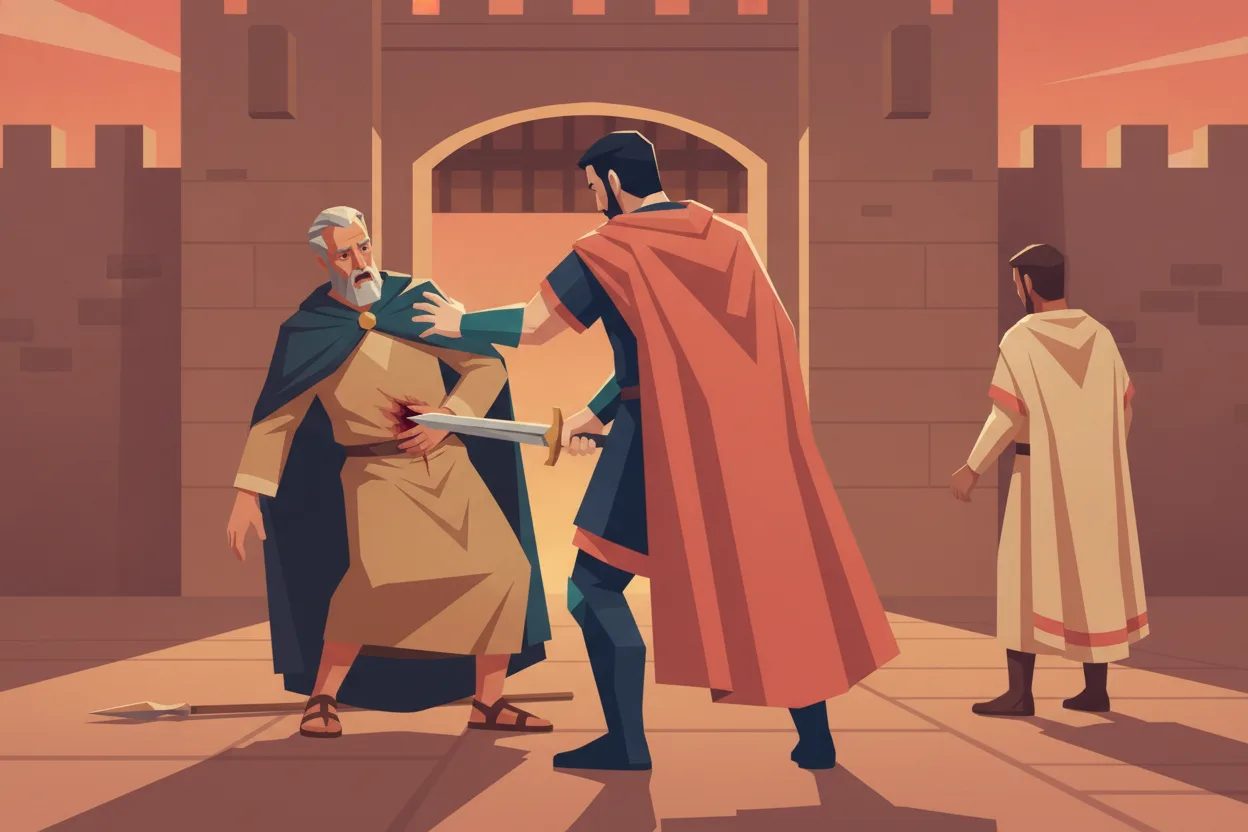
Abner has just made peace with David. He leaves calmly, without suspicion. But Joab, the commander of David's army, has not gotten over the death of his brother Asahel, killed by Abner in battle. Joab sends messengers who secretly call Abner back, away from David's sight.
Abner returns, trusting, all the way to the gate of Hebron. Joab draws him aside, as if to speak with him privately. Then, without warning, he strikes him in the belly with his sword. Abner collapses, dead. It is a cold revenge, disguised as a friendly talk.
The news spreads quickly. David learns what has happened. He understands right away the danger: this murder could stain his reputation and reignite war with Saul's supporters. Abner, the man who still held up the opposing camp, is no more. The road to a united kingdom seems clear, but the blood spilled by Joab casts a heavy shadow over the future.
2 Samuel 5:6-9
Capture of Jerusalem
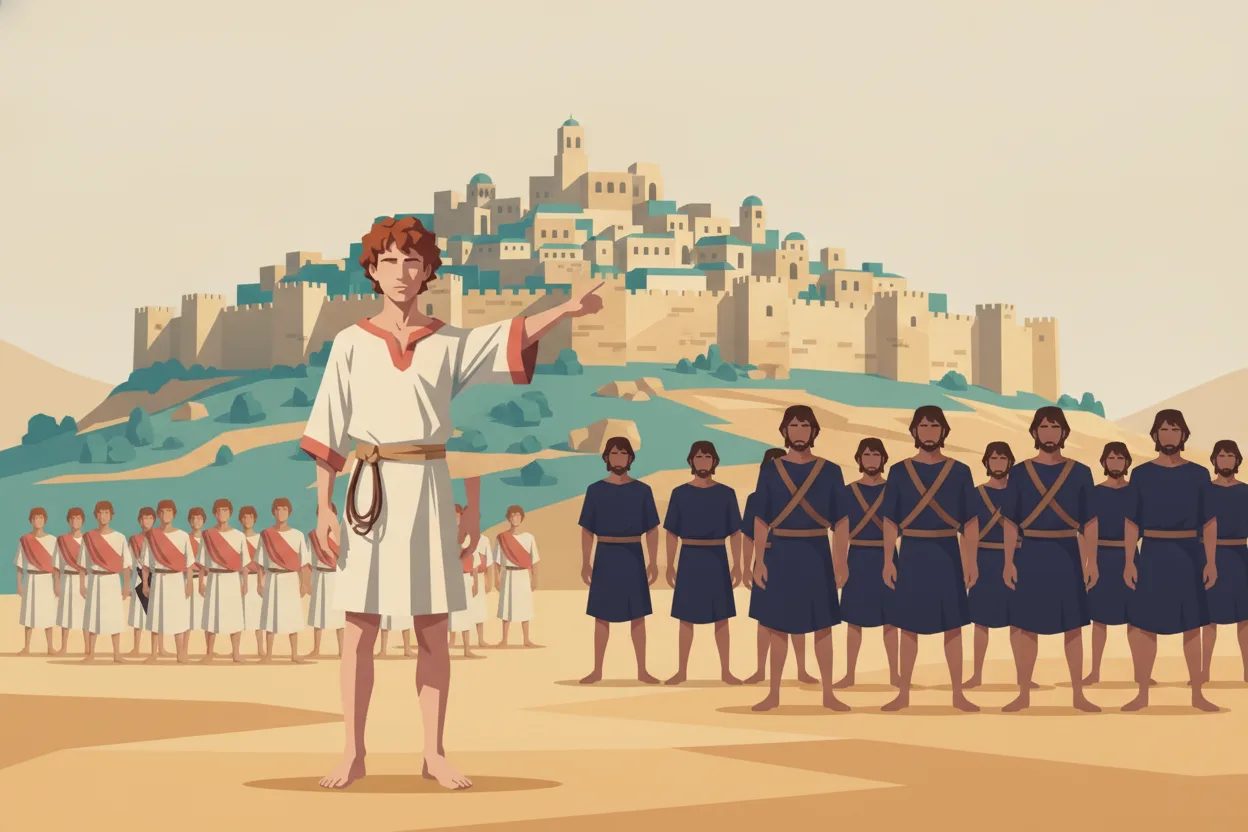
David is now king over all Israel. He looks toward a city perched on a hill: Jerusalem. It still belongs to the Jebusites, a people who have lived there forever. David decides to take it.
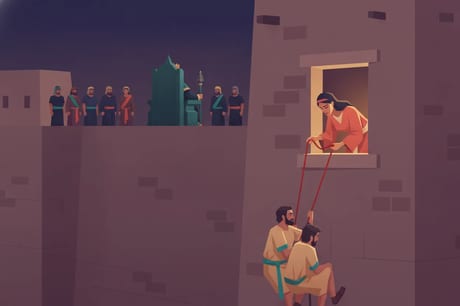
The Jebusites mock him. They shout from atop their walls: "You will never enter here! Even the blind and the lame could keep you out!" They believe themselves safe, protected by their ramparts.
But David knows a secret: a water tunnel that runs beneath the city. He issues a challenge to his men: "Whoever strikes the Jebusites first, by going through the channel, will become the commander of my army!" His soldiers climb through this hidden passage and take the city by surprise. David settles there. He now calls it the City of David. Jerusalem becomes his capital.
2 Samuel 6:12-16
The ark enters Jerusalem
David hears some news: the house of Obed-Edom, where the ark of God rests, has been blessed since its arrival. So he makes up his mind. He goes to bring the ark back to Jerusalem, with joy.
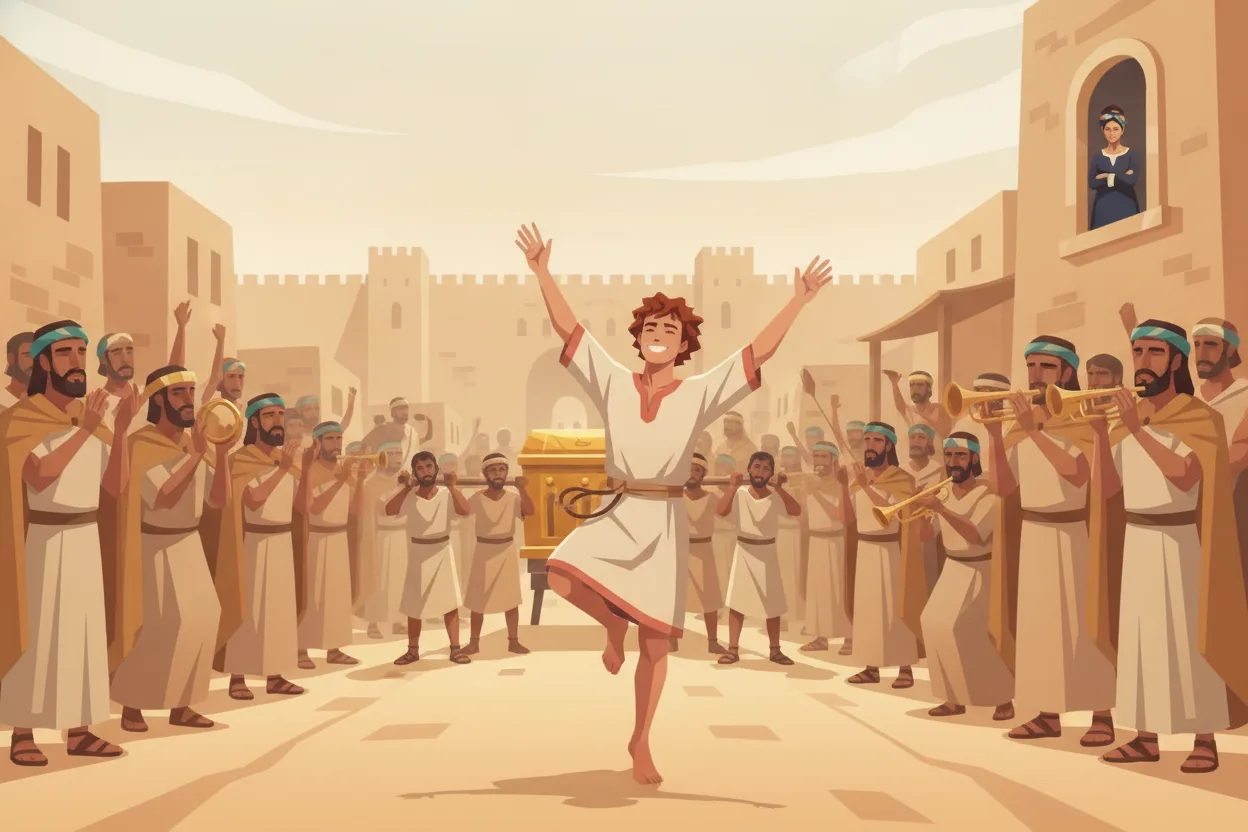
The men carry the ark. After six steps, David stops everyone and offers a sacrifice: a bull and a fattened calf. Then he dances before the ark with all his strength, dressed in a simple linen garment. The people shout, the trumpets sound. They move on like this all the way to Jerusalem.
David sets the ark in a tent prepared for it. He offers more sacrifices, then blesses all the people in the name of the Lord. But a woman watches from a window: Michal, daughter of Saul and wife of David. She sees him leaping and dancing before the ark. In her heart, she despises him.
2 Samuel 7:1-17
The Davidic covenant
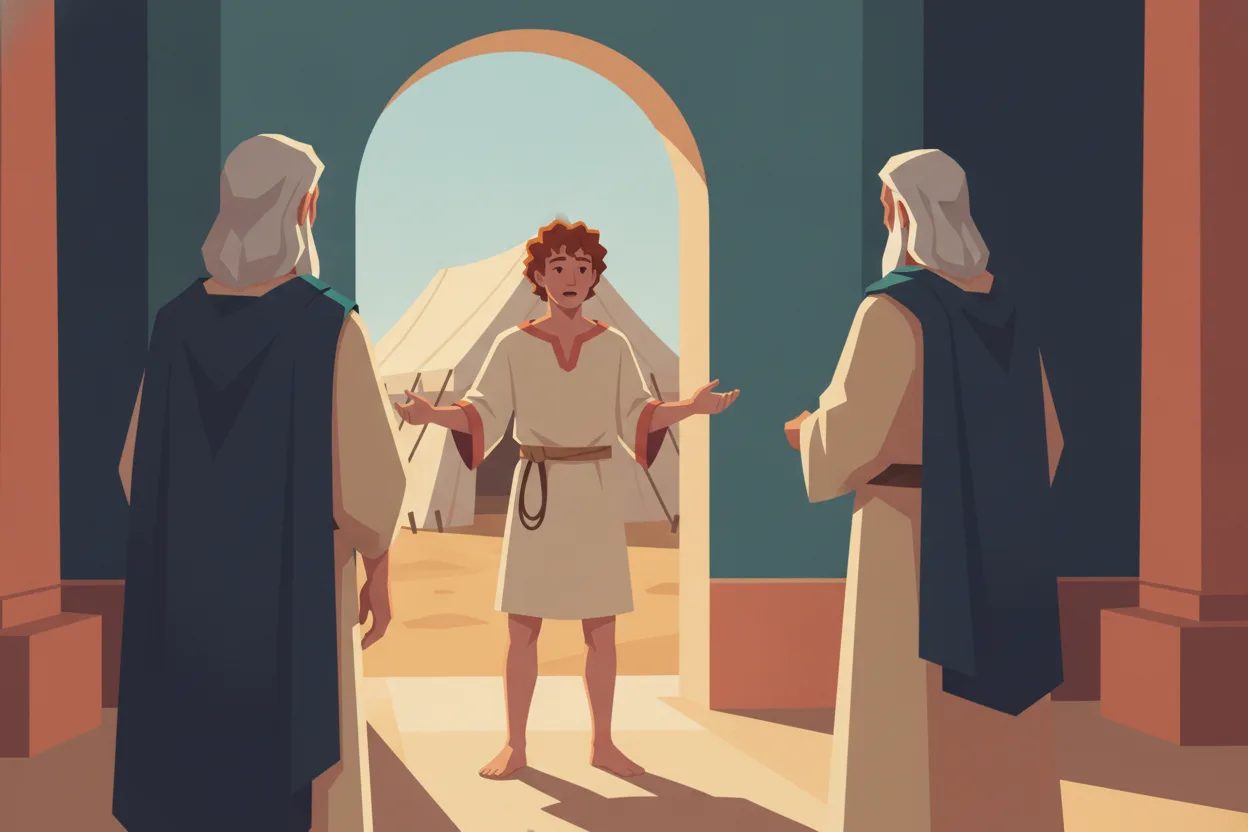
David now lives in peace in his palace in Jerusalem. One day, he calls the prophet Nathan. "Look," David says, "I live in a house of fine wood, while the ark of God stays under a simple tent." Nathan answers: "Do whatever you have in mind, God is with you."
But that very night, God speaks to Nathan. "Go tell David: it is not you who will build me a house. It is I who took you from following the sheep to make you king. I gave you victory everywhere. And after your death, I will make your family last forever. One of your sons will build my house, and his throne will never end."
The next day, Nathan reports every word to David. The king understands: God does not want a temple built now, he promises something far greater, a dynasty that will never end.
2 Samuel 11:2-17
David, Bathsheba, and Uriah's death
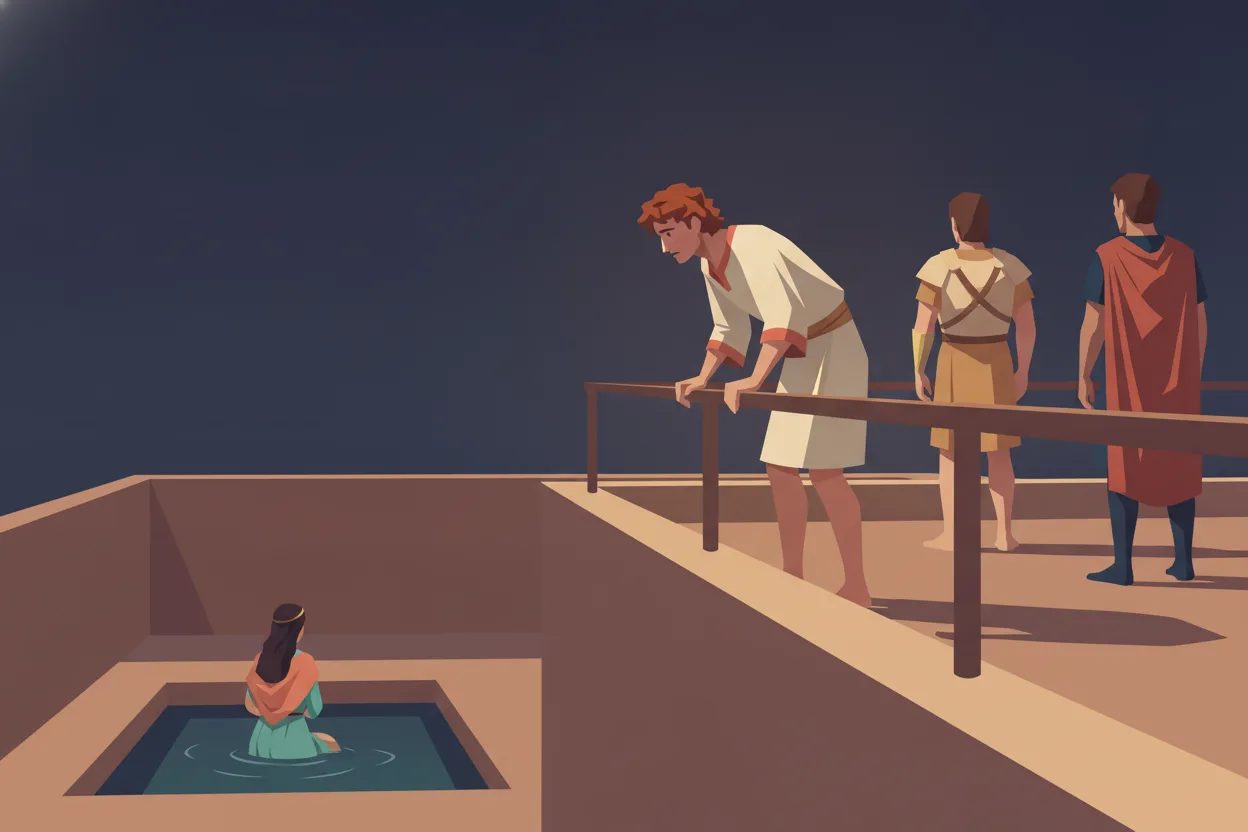
One evening, David walks on the roof of his palace. Below, he sees a woman bathing. Her name is Bathsheba. She is very beautiful. David sends messengers to find out about her. He is told: "This is Bathsheba, the wife of Uriah the Hittite, one of your soldiers." Despite this, David has her brought to him, and sleeps with her. Then she goes back home.
A few weeks later, Bathsheba sends word to David: "I am pregnant." David panics. He brings Uriah back from the front, hoping he will sleep at home and the child will be thought his. But Uriah refuses to go home, out of loyalty to his comrades still fighting.
So David writes a letter to Joab, his army commander, and gives it to Uriah himself to carry: "Put Uriah at the front of the fiercest fighting, then pull back, so that he is struck down and dies." Joab obeys. Uriah dies in battle, a victim of the king he faithfully served.
2 Samuel 12:1-13
Nathan confronts David
God sends the prophet Nathan to David. Nathan tells a story: "In a city, there is a rich man with huge flocks, and a poor man who has only one little ewe lamb. He loves it like a daughter. One day, a traveler arrives at the rich man's house. But the rich man takes the poor man's lamb to feed his guest."
David grows angry. He says: "That man deserves to die! He must pay back four times the lamb!"
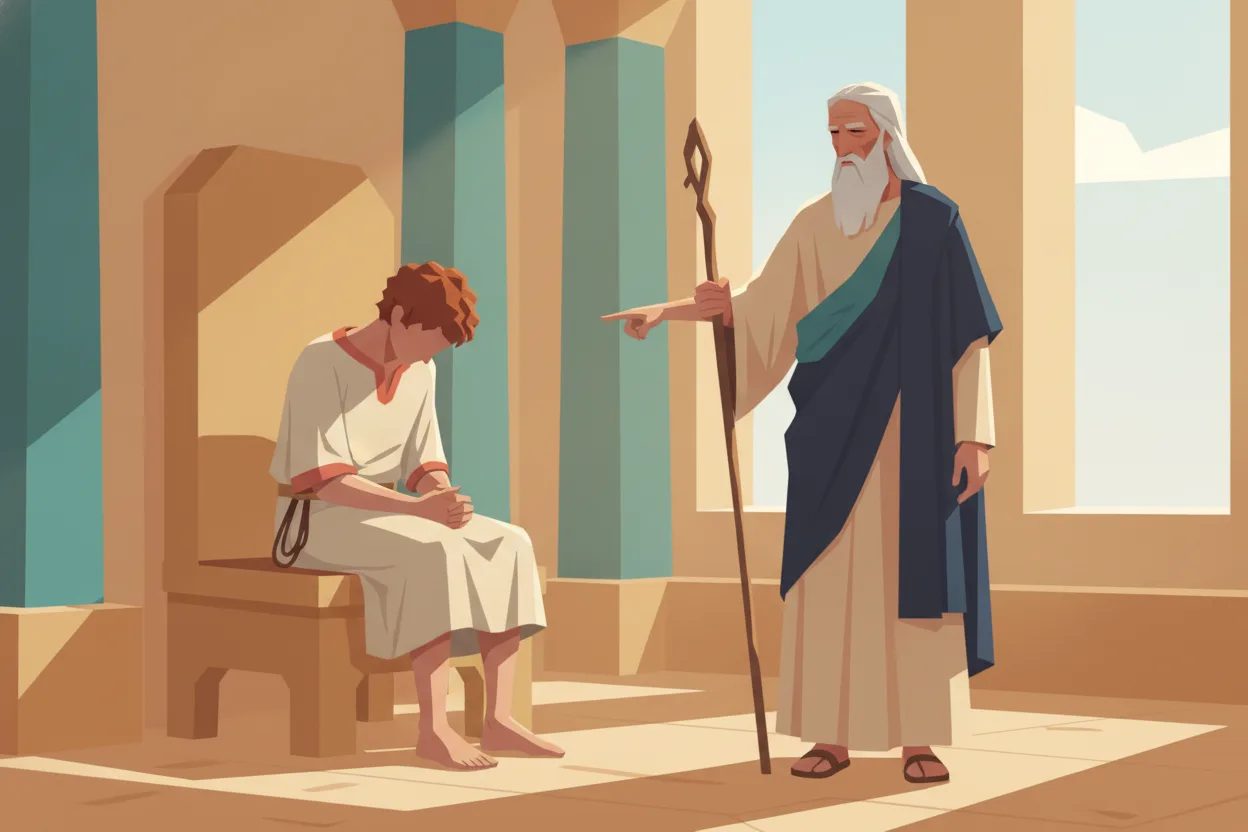
Nathan looks at David and answers: "You are that man. God gave you everything, and yet you took Uriah's wife and had him killed. The sword will never leave your house again."
David lowers his head. He simply says: "I have sinned against the Lord." Nathan answers: "God forgives your sin, but the consequences will remain."
2 Samuel 13:1-19
Amnon rapes Tamar
David has several children. Amnon loves Tamar, his half-sister. This love makes him sick. His friend Jonadab gives him a cunning idea.
Amnon pretends to be ill. He asks that Tamar come to prepare food for him. David agrees. Tamar comes, cooks in front of him. But Amnon sends all the servants away. He grabs Tamar and wants to sleep with her.
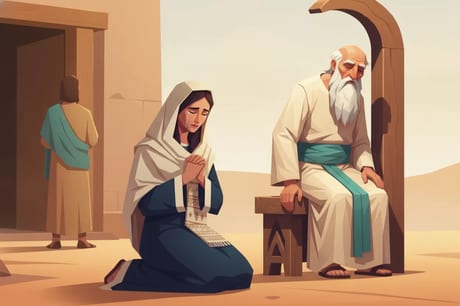
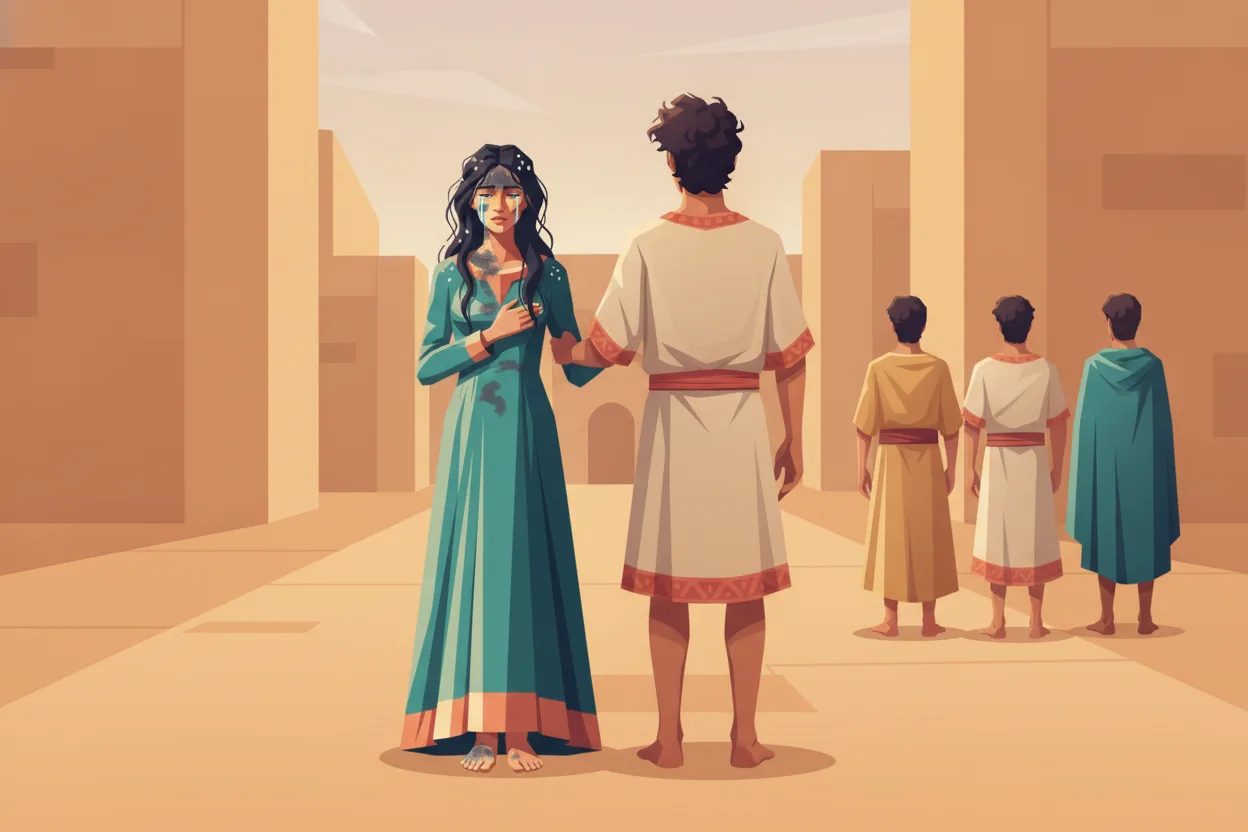
Tamar begs: "No, my brother! Do not do this to me. Ask the king for me in marriage, he will not refuse you." Amnon does not listen. He forces her, then hates her at once afterward and throws her out. Tamar tears her robe, puts ashes on her head, and weeps. Her brother Absalom takes her in and tells her to be silent. But in his heart, he holds a cold hatred against Amnon.
2 Samuel 13:23-29
Absalom has Amnon killed
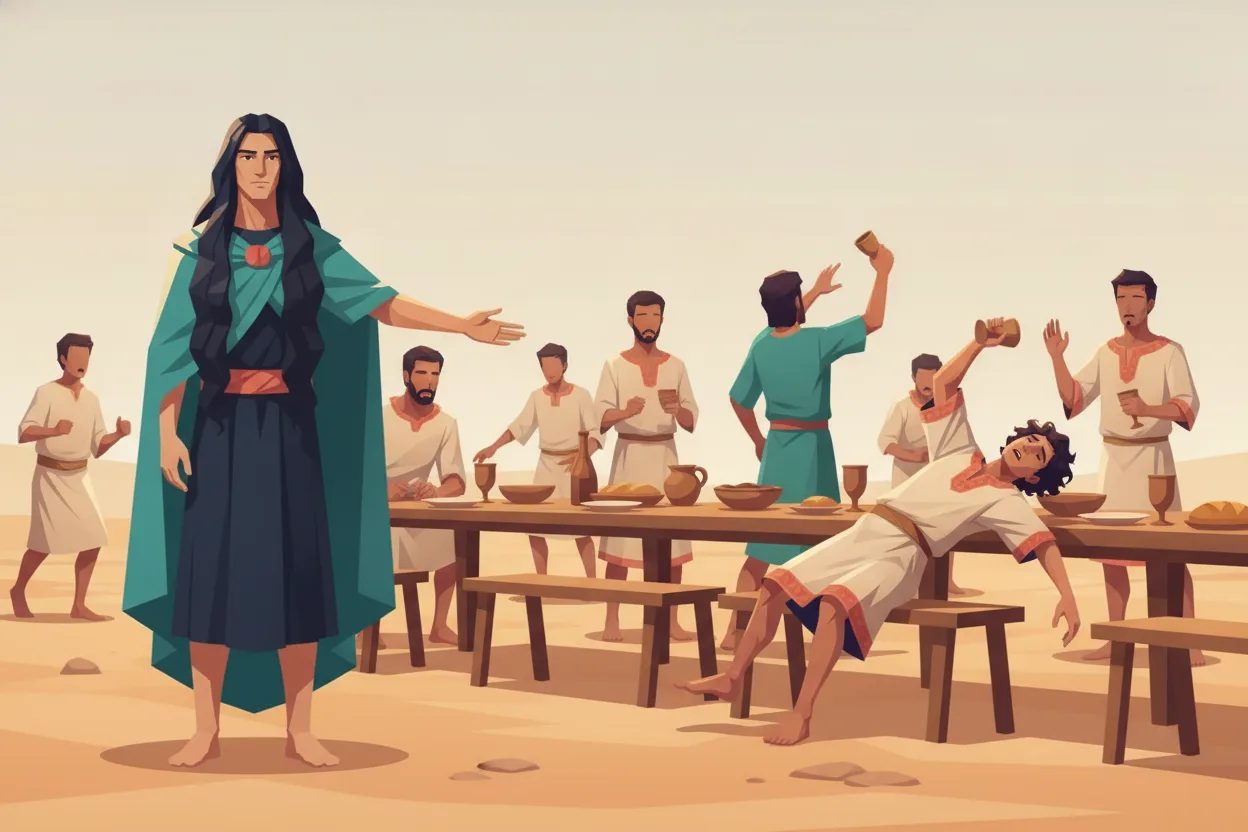
Two years pass. Absalom has not forgotten anything. He organizes a great feast, the shearing of his sheep, and invites all the sons of King David. He even insists that Amnon come, the one who wronged his sister Tamar.
The meal begins joyfully. The wine flows. Then Absalom gives an order to his servants: "When Amnon is merry with wine, strike him. Kill him. Do not be afraid, I am the one giving the command." The servants obey. Amnon falls dead at the table.
The king's other sons, terrified, jump on their mules and flee toward Jerusalem. A messenger arrives ahead of them at David's house and tells him false news: all his sons are dead. The king tears his clothes. Then the truth comes out: only one is dead, Amnon. Absalom, meanwhile, has fled far from his father.
2 Samuel 15:13-30
Absalom's revolt, David's flight
A messenger arrives running. He cries out to David: "The hearts of the men of Israel are with Absalom!" David understands. His son has taken the city of Hebron. The revolt is now spreading all the way to Jerusalem.
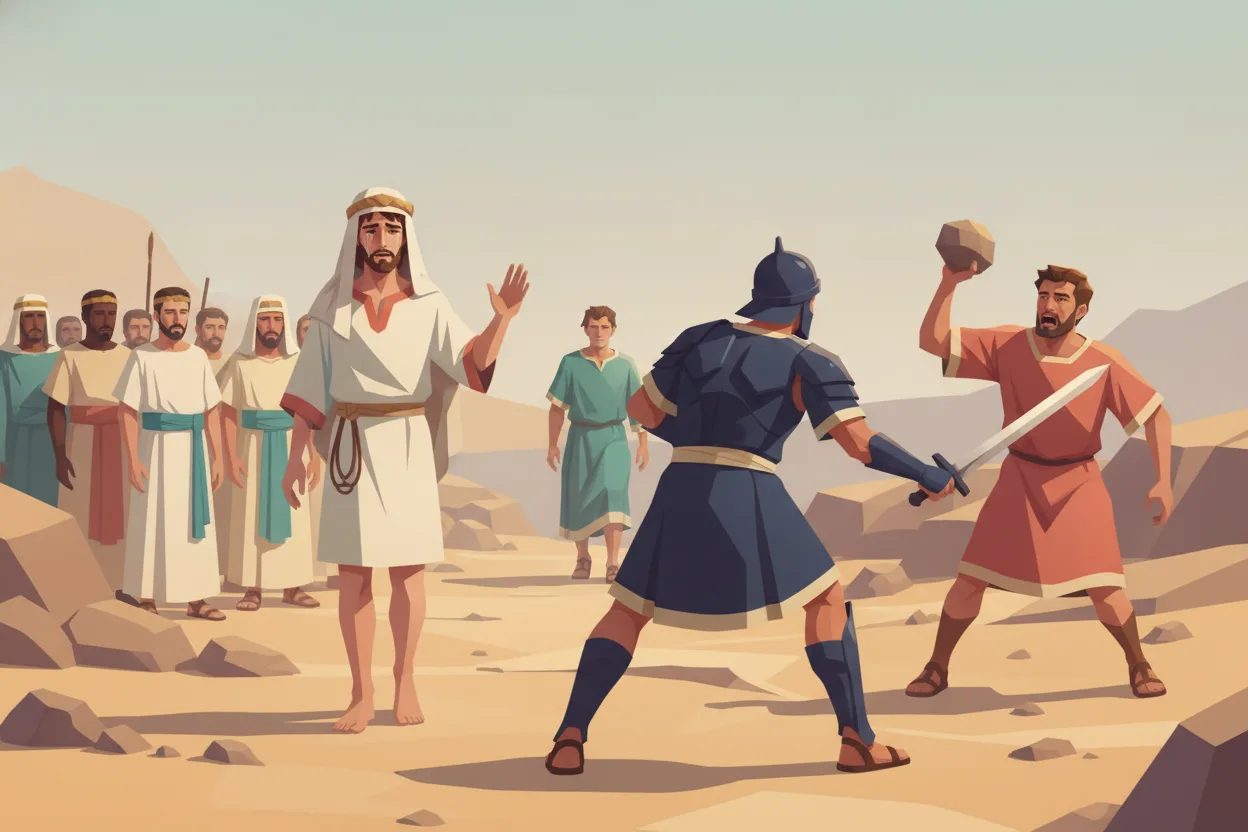
David calls his servants. "Get up! Let us flee, or none of us will escape Absalom." The whole king's household leaves on foot. David leaves his palace, weeping as he climbs the Mount of Olives, head covered, feet bare. Priests follow him with the ark of God, but David tells them to bring it back to the city: "If God wants me, he will bring me back to see it."
Along the way, Shimei, a man from Saul's family, throws stones and insults David: "Get out, man of blood!" A soldier wants to kill him. David refuses: "Leave him alone. Perhaps God told him to curse me." The king continues on his way, humble, abandoned, but trusting.
2 Samuel 18:9-15
Absalom's death in the forest
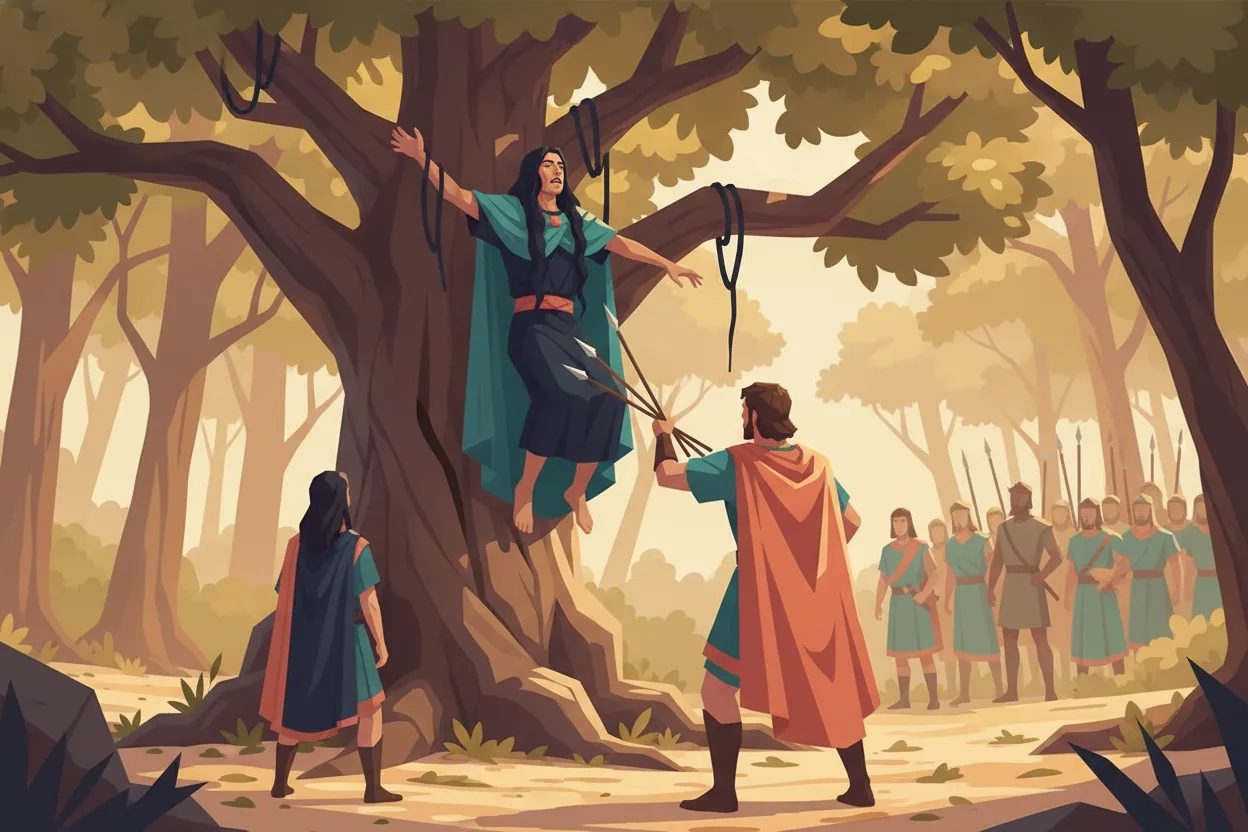
The battle rages in the forest. Absalom flees on his mule. Suddenly, his head gets caught in the branches of a great oak. The mule keeps running without him. Absalom hangs in the air, helpless.
A soldier sees him and runs to tell Joab. "I saw Absalom hanging from a tree!" he says. Joab answers: "Why didn't you strike him down on the spot? I would have rewarded you." The soldier refuses: "The king said to spare him. I will not betray that order, even for money."
Joab does not wait. He takes three javelins and plunges them into Absalom's heart, still alive in the tree. Ten young men who carry Joab's weapons finish him off. So dies David's rebellious son, hanging between heaven and earth, betrayed by his own hair.
2 Samuel 20:14-22
End of Sheba's rebellion
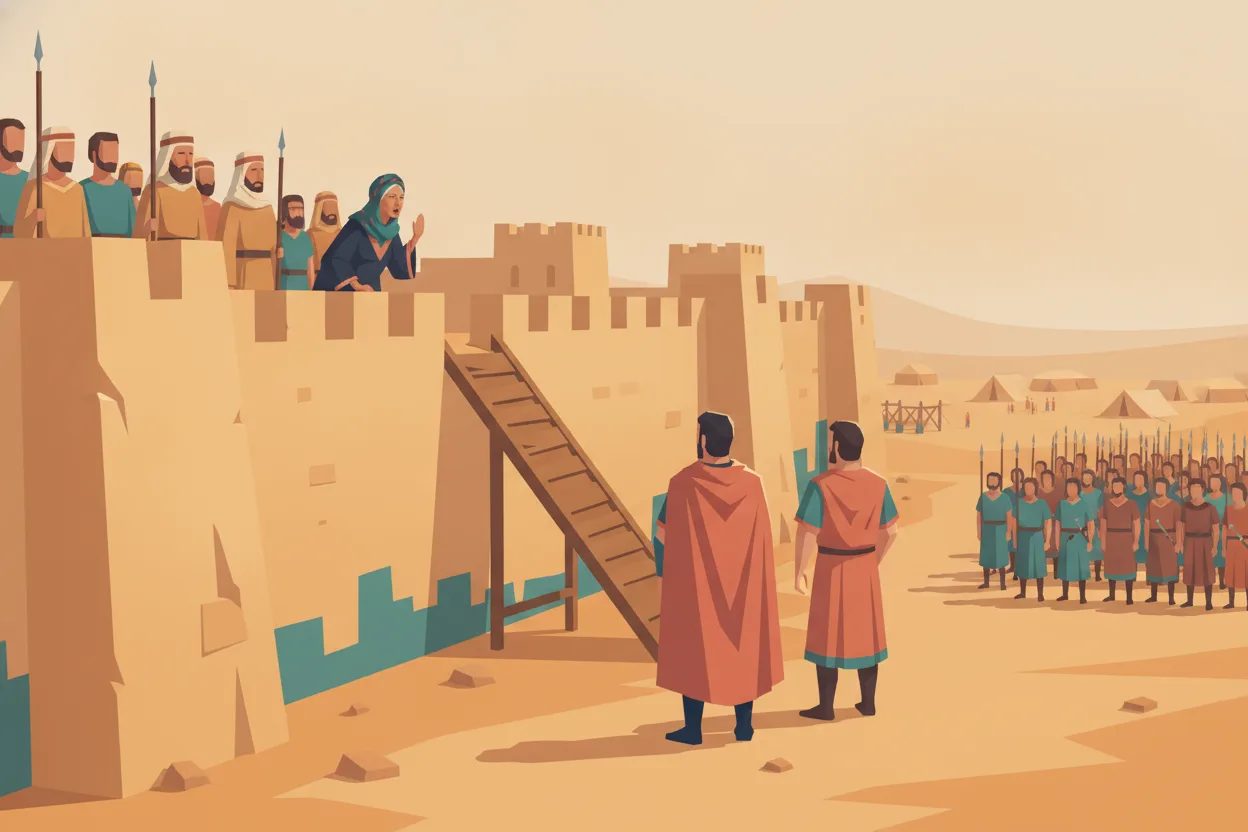
A man named Sheba has rebelled against King David. He flees to the city of Abel Beth Maacah. Joab, David's general, pursues Sheba with his army. He surrounds the city and begins building a ramp to break down its walls.
Inside the city, a wise woman climbs onto the wall. She calls out to Joab: "Listen to me! In the old days they used to say: ask counsel at Abel, and so they settled matters. I am peaceful and faithful in Israel. Why do you want to destroy a city, a mother in Israel? Why swallow up the Lord's inheritance?"
Joab answers: "I do not want to destroy or ruin anyone. Just give me Sheba, the rebel, and I will leave."
The woman answers: "His head will be thrown to you over the wall."
She convinces the people of the city. They cut off Sheba's head and throw it to Joab. He sounds the trumpet. The army withdraws. The city is saved, and the kingdom finds peace again.
2 Samuel 24:15-25
David buys Araunah's threshing floor
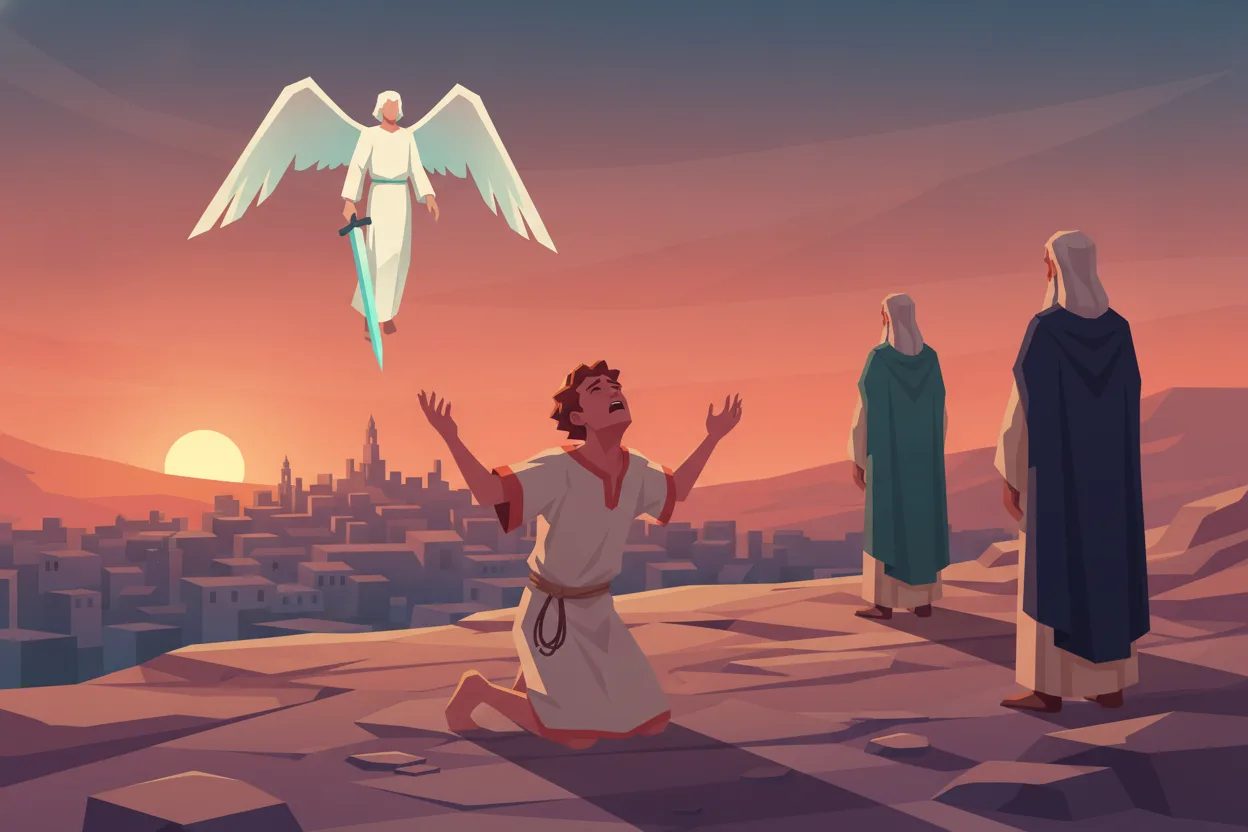
A plague strikes the land. Thousands die, because of a census David wanted to take out of pride. The angel of God advances toward Jerusalem, ready to strike it too.
David looks up. He sees the angel standing near the threshing floor of Araunah, sword raised over the city. He cries out to God: "It is I who have sinned! These people have done nothing. Strike me, me and my family, but let them live!" God stops the angel. The prophet Gad comes to tell David: "Go up to this threshing floor. Build an altar to the Lord."
David goes to Araunah. Araunah offers everything for free: the land, the oxen, the wood. David refuses: "I will not give to God what costs me nothing." He pays the fair price. He builds the altar, offers the sacrifices. God hears his prayer. The plague stops. On this ground, one day, the Temple will rise.
Characters in This Chapter

King of Israel whose reign is chronicled with both triumphs and failures

Woman with whom David committed adultery, later mother of Solomon

Prophet who confronted David about his sin and delivered God's covenant

David's son who rebelled and tried to take the throne

David's military commander, loyal but sometimes ruthless