Updated on

The key moments of the book, in order, one picture at a time.
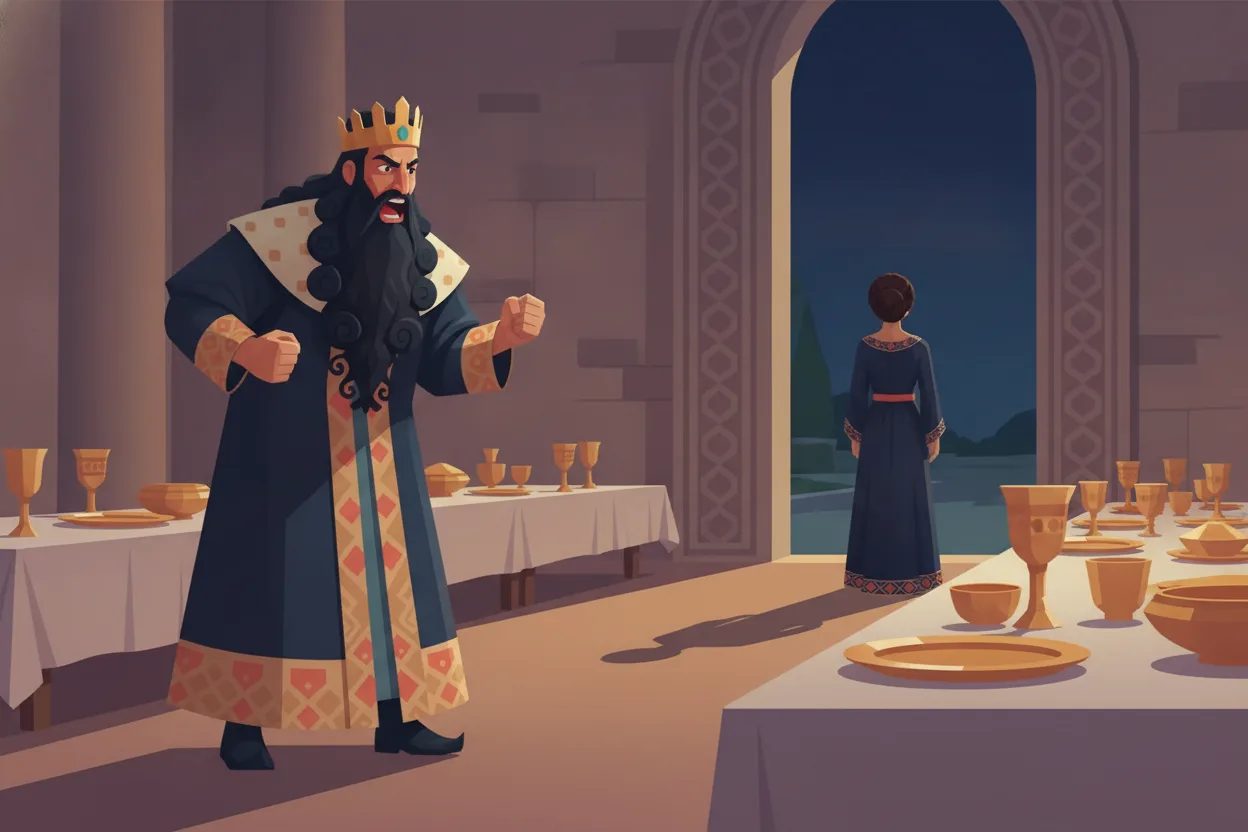
Esther 1:10-12
The great feast of Susa
In the city of Susa, at the heart of the vast Persian empire, reigned King Xerxes. His realm stretched from India to Ethiopia. To display his wealth he threw an outsized feast: six months showing off his treasures, then seven days of banqueting in the palace gardens. Wine was poured from golden cups, no two of them alike.
On the seventh day, half drunk, the king sent for Queen Vashti to show off her beauty to his guests. Vashti refused to come. Humiliated in front of everyone, the king fell into a black rage. On his ministers' advice he sent her away and set about finding a new queen.
Esther 2:7-11
The orphan of the palace
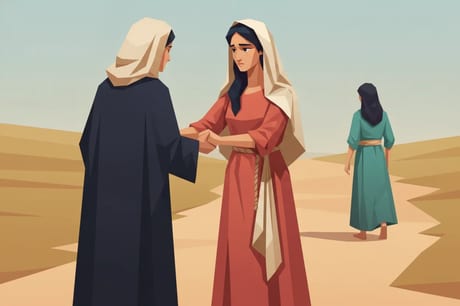
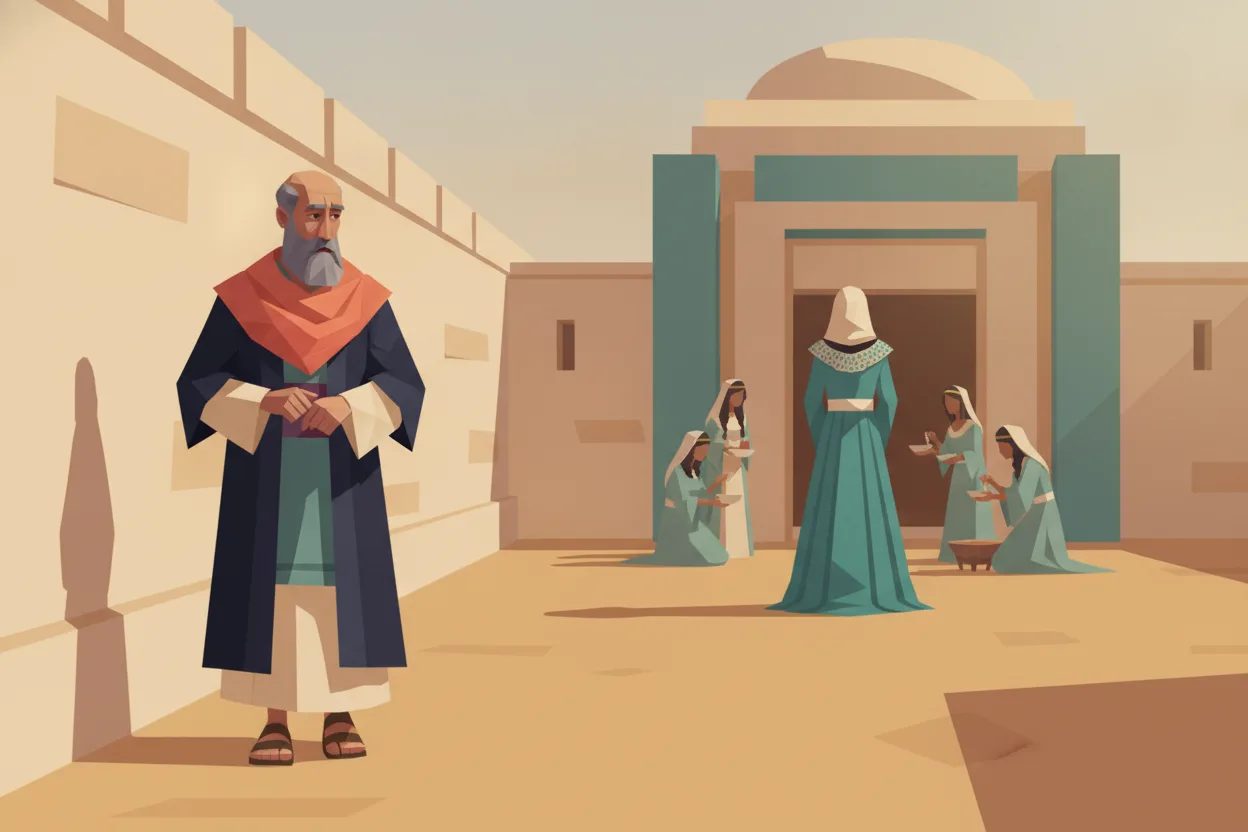
In Susa lived a Jew named Mordecai. He had taken in his young cousin Hadassah, called Esther, after her parents died, and had raised her as his own daughter.
When the king's envoys gathered the loveliest young women of the kingdom, Esther was taken to the palace. Before she went, Mordecai gave her one instruction: “Tell no one that you are Jewish.” Esther obeyed. For a year she was given beauty treatments, perfumes, myrrh. Every day Mordecai walked past the court of the women to ask after her.
Esther 2:17
The crown
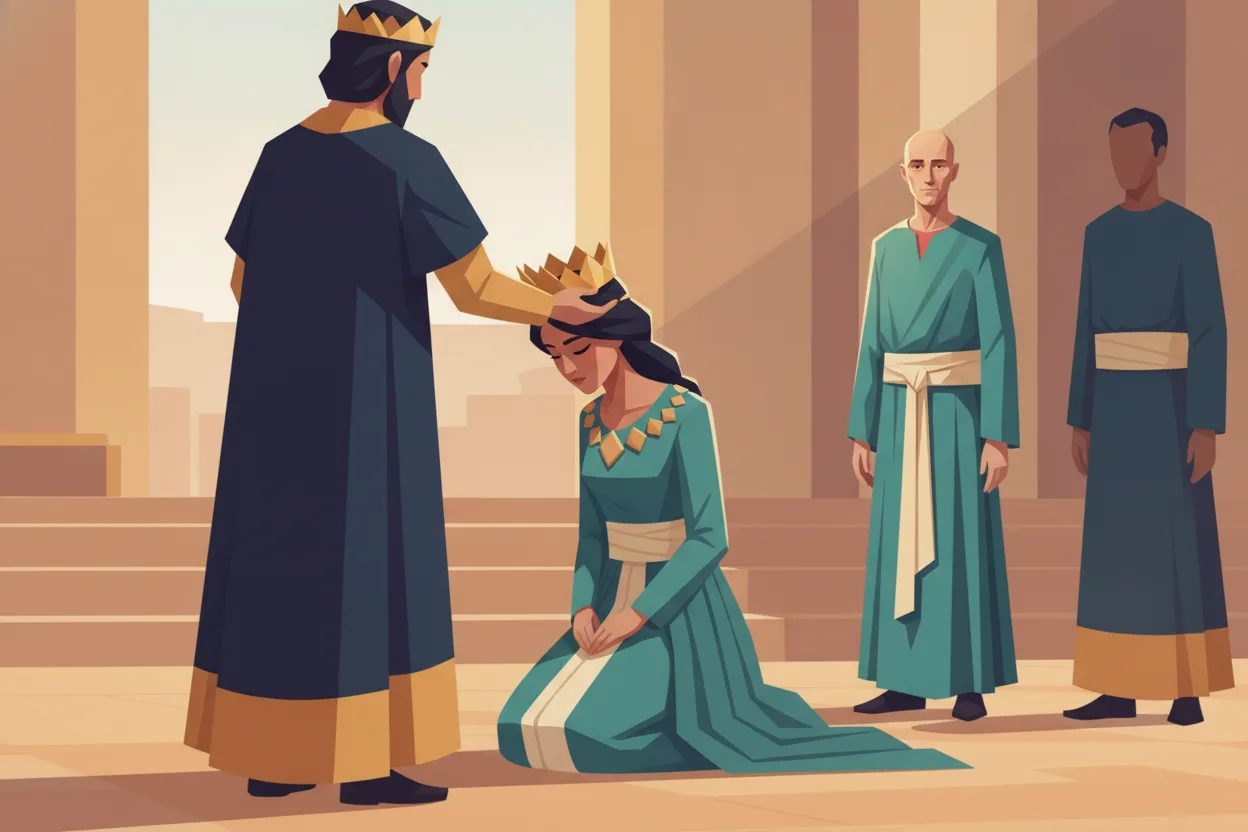
When Esther's turn came to go before the king, she asked for nothing in particular, only what Hegai the eunuch advised. The king saw her, and she pleased him more than all the others. He set the royal crown on her head and gave a great feast in her honour.
The little orphan had become queen of Persia. And no one knew where she came from.
Esther 2:21-23
The plot at the gate
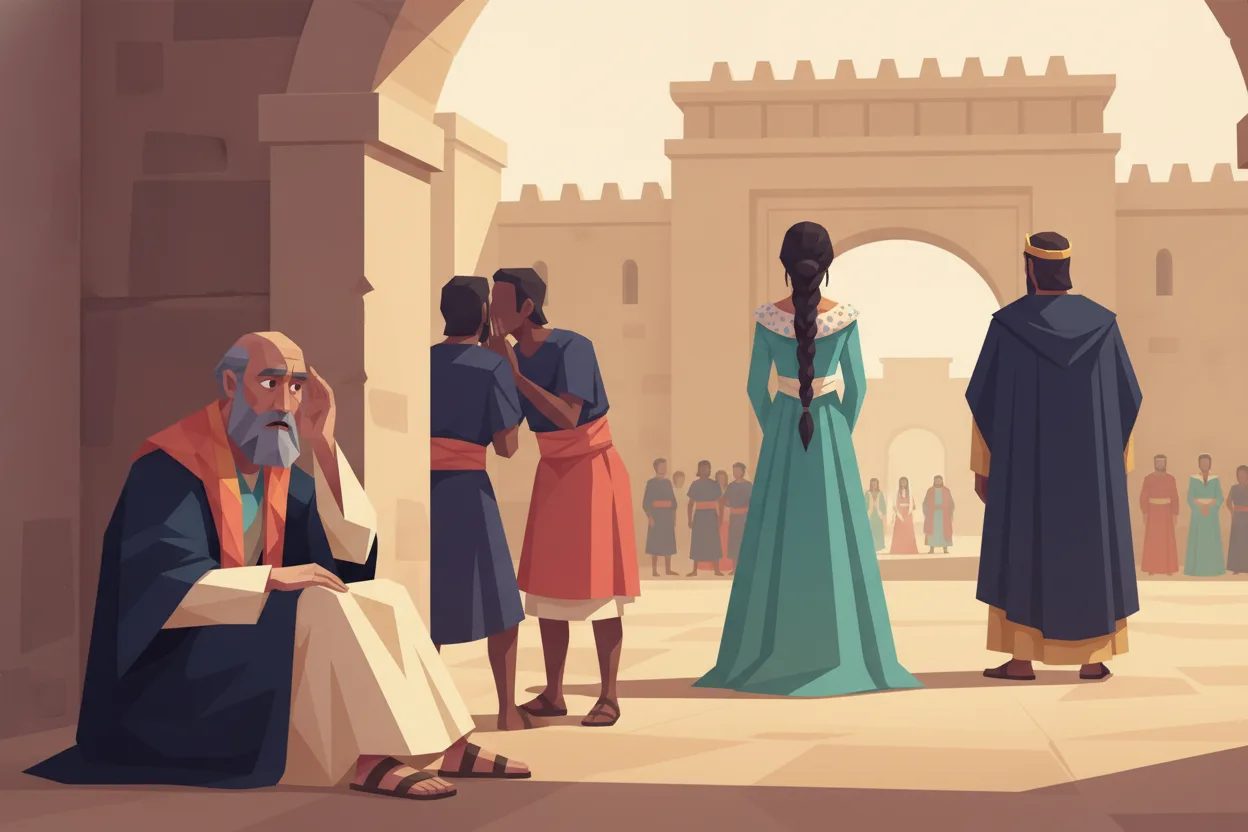
Mordecai used to sit at the palace gate. One day he overheard two guards, Bigthan and Teresh, plotting to kill the king. He told Esther at once, and she warned the king in Mordecai's name. The matter was checked, the two traitors were executed, and the story was written down in the royal chronicles.
Then everyone forgot about it.
Esther 3:2-11
Haman and the lots
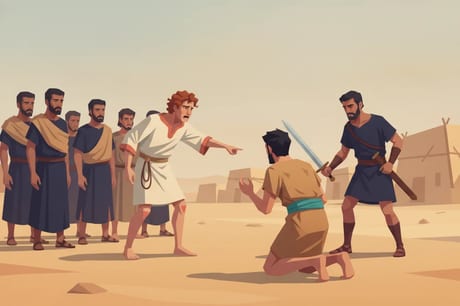
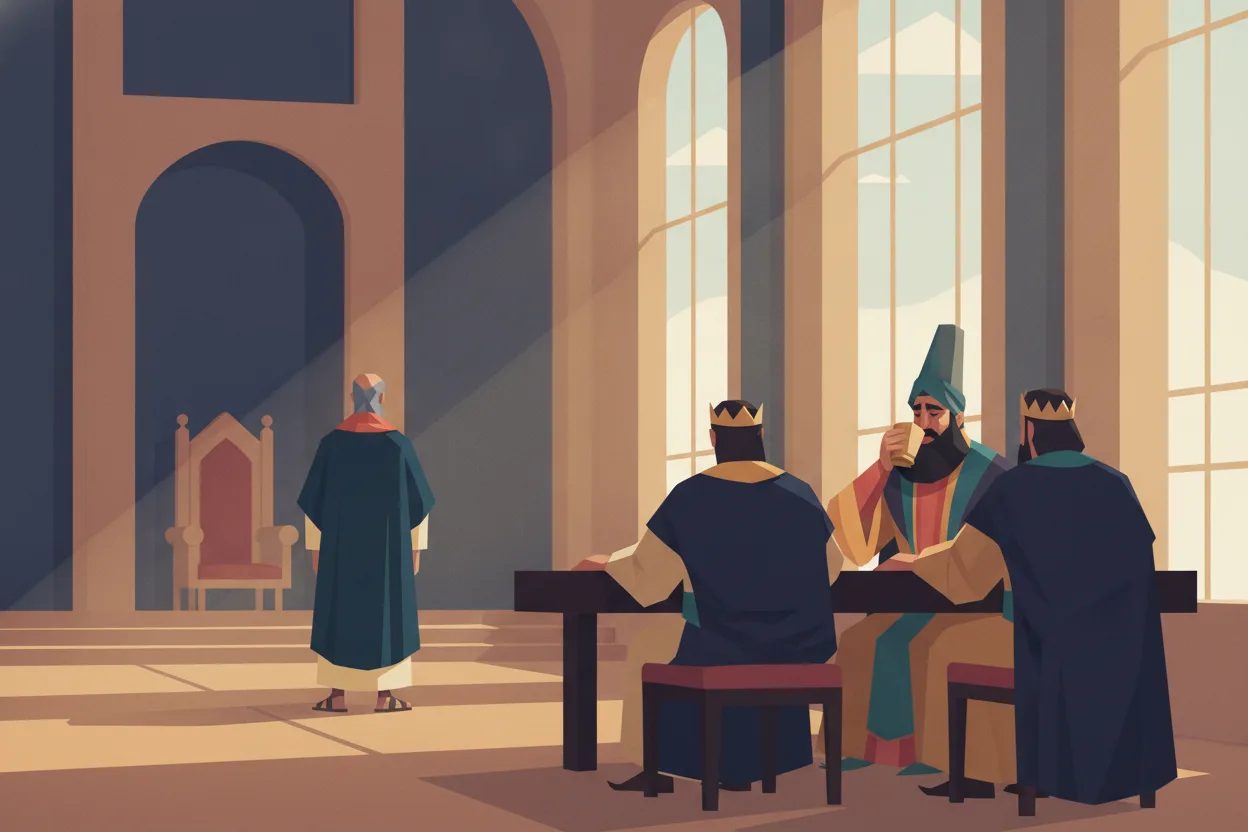
The king raised a man named Haman above all his ministers. From then on every servant of the palace had to bow as he passed. Everyone, except one: Mordecai.
Haman seethed. But punishing one man was not enough for him. When he learned that Mordecai was a Jew, he decided to wipe out his whole people. He had lots cast, the pur, to choose the day of the massacre: the thirteenth of the month of Adar. Then he went to the king, spoke to him of a people who were “different” and did not keep his laws, and even offered silver for the treasury. The king, without a thought, handed him his signet ring: “Do as you please.”
The decree went out to every province. The king and Haman sat down to drink. In the city, there was dismay.
Esther 4:1-16
For such a time as this
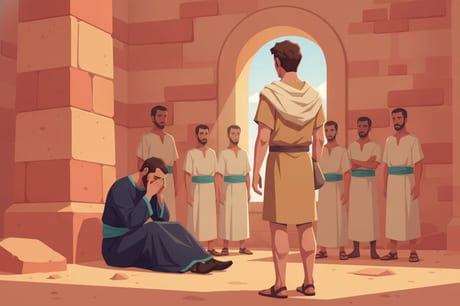
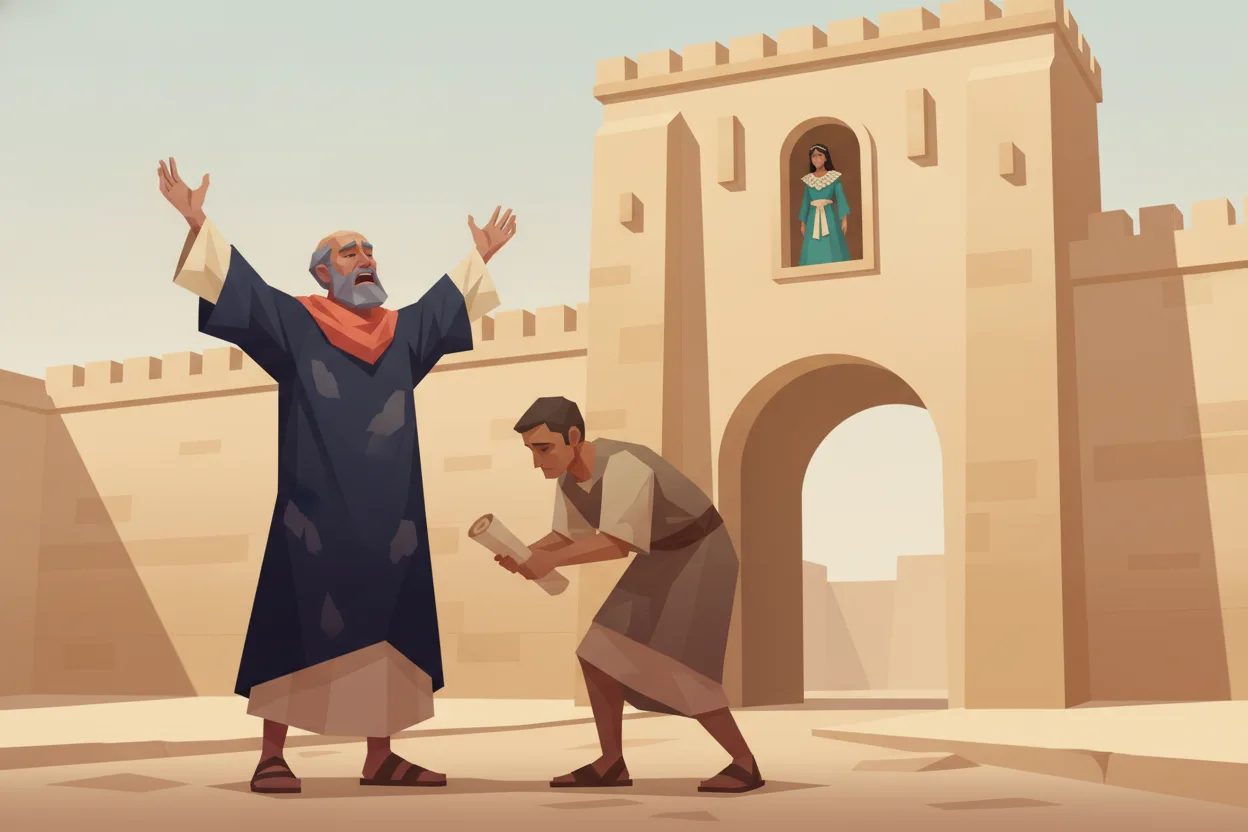
When Mordecai heard the news he tore his clothes, covered himself in sackcloth and ashes, and cried out in the streets. Esther, alarmed, sent a servant to find out what was happening. Mordecai sent her a copy of the decree and begged her to go to the king.
But Esther was afraid. No one could come before the king unsummoned, on pain of death, unless he held out his golden sceptre. And he had not called for her in a month.
Mordecai sent back word: “Do not imagine you will be spared because you live in the palace. And who knows whether it is for a moment just like this one that you became queen?”
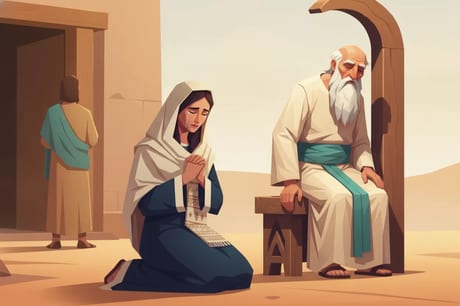
Esther thought it over, then sent her answer: “Gather every Jew in Susa. Fast for me three days. I will fast too. Then I will go to the king. And if I must die, I will die.”
Esther 5:2
The golden sceptre
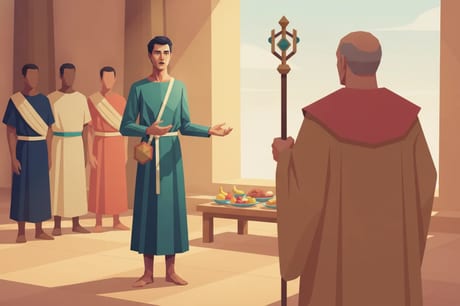
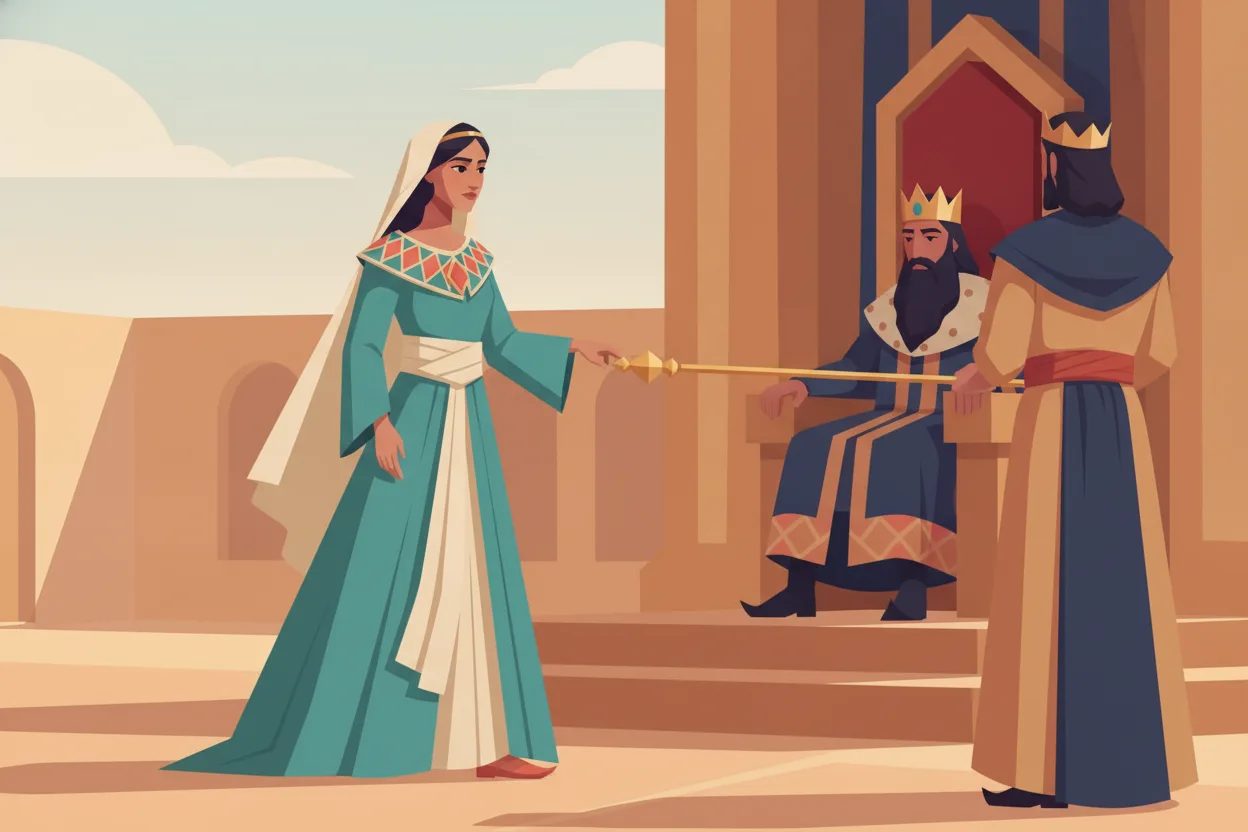
On the third day Esther put on her royal robes and entered the great court, facing the throne room. Silence. The king looked up, and held out his golden sceptre toward her. Esther came forward and touched its tip.
“What do you want, Queen Esther? Even half my kingdom, I will give it to you.”
But Esther asked for none of that. She simply invited the king and Haman to a banquet. During the meal the king pressed her again. She smiled and answered: “Come back tomorrow, to another banquet. Then I will tell you what I wish.”
Esther 6:10-11
The sleepless night
Haman went home delighted: invited twice by the queen! But as he passed the gate he saw Mordecai, who once again did not rise. His wife Zeresh advised him to have an enormous gallows built and to ask the king, first thing in the morning, to hang Mordecai on it. Haman thought the idea excellent.
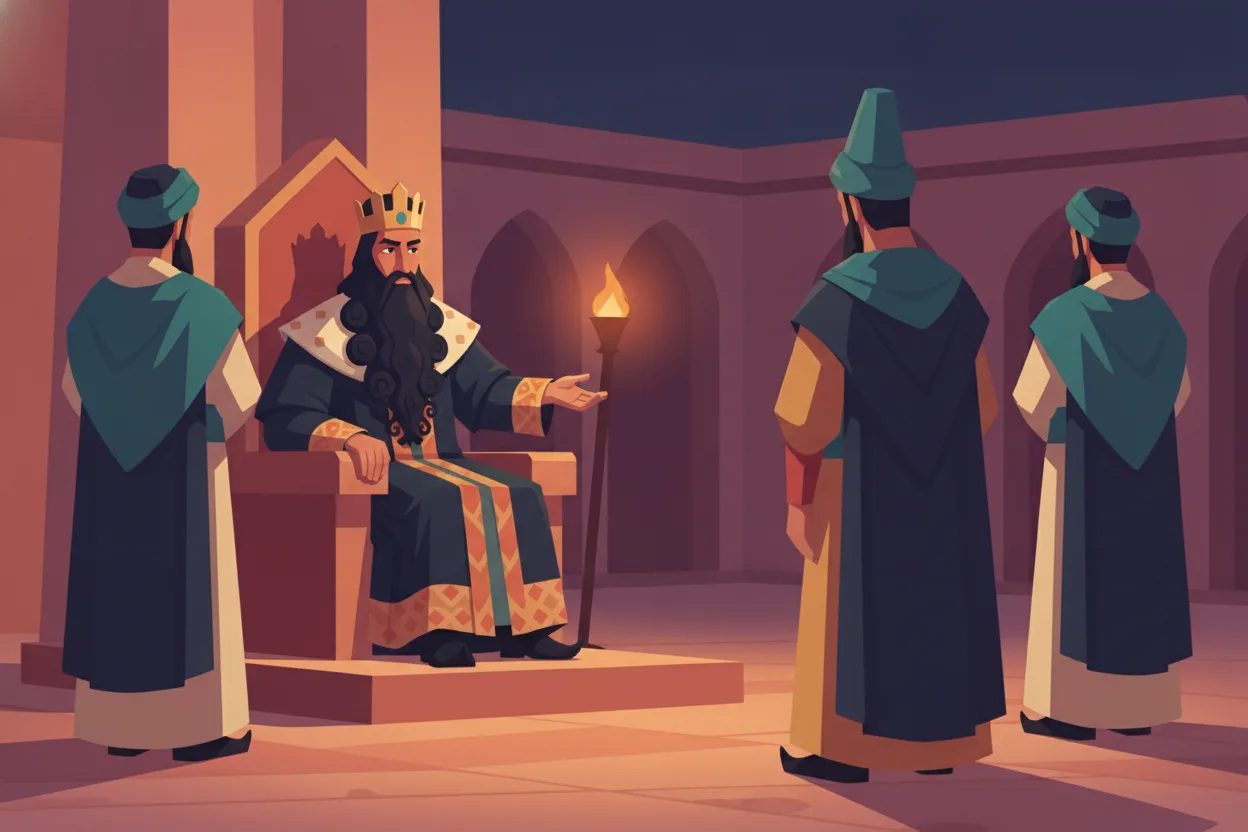
That night the king could not sleep. He had the chronicles of the kingdom read to him and came upon the story of the plot Mordecai had foiled. “What reward did he receive?” None.
At that very moment Haman came into the court to speak about his gallows. The king asked him: “What should be done for a man the king wishes to honour?” Haman, certain he was the man in question, answered that he should be dressed in the king's own robes, mounted on the king's own horse, and led through the city by a great minister crying: this is what is done for the man the king wishes to honour. “Perfect,” said the king. “Go and do it for Mordecai.”
Esther 7:3-6
The second banquet
Haman had barely got home, head down, when the king's servants came to fetch him for Esther's banquet.
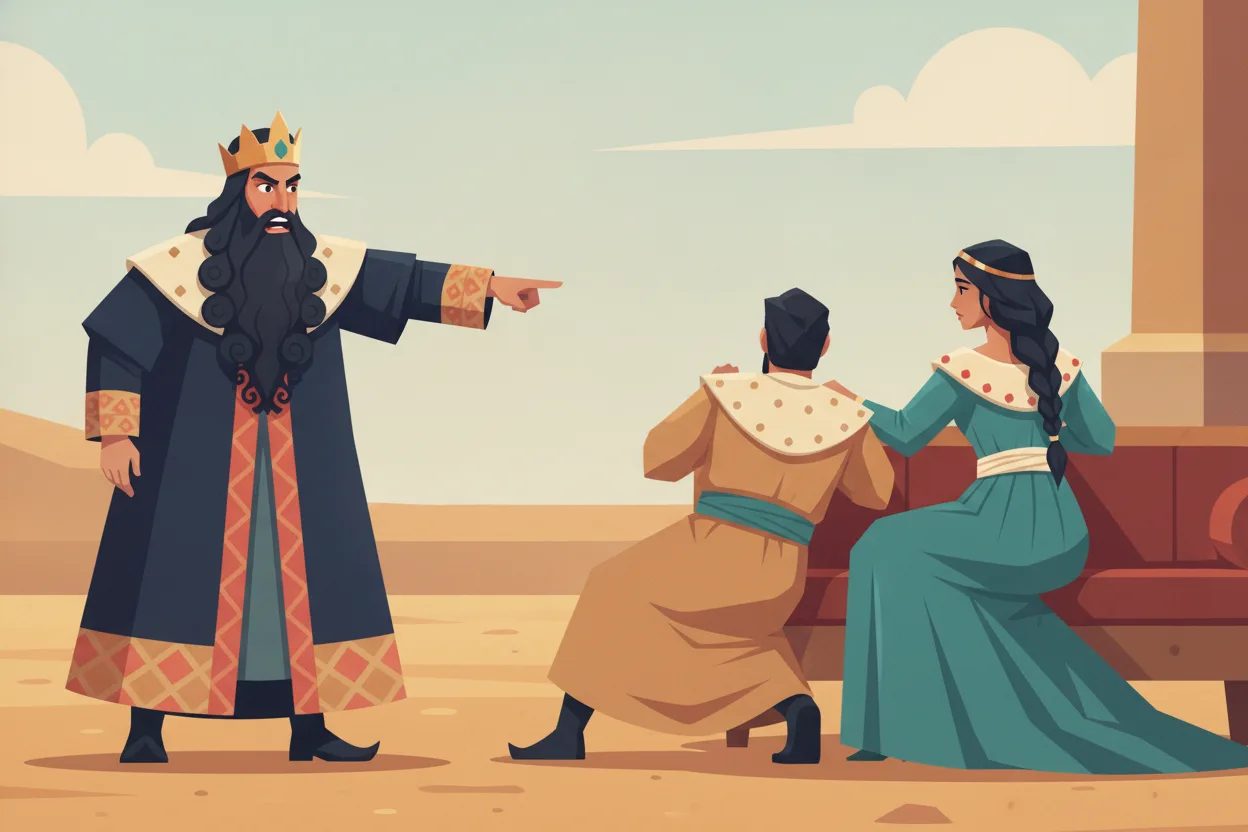
Once more the king asked what she desired. This time Esther spoke: “If I have found favour in your eyes, let me live, and let my people live. For we have been sold to be destroyed.” “Who has dared do such a thing?” asked the king. “The enemy is Haman, this wicked man here.”
The king rose in fury and went out into the garden. Haman, terrified, threw himself on Esther's couch to beg her. When the king came back and saw him there, his anger doubled. A servant pointed out that a gallows fifty cubits high was already waiting, at Haman's house. “Hang him on it,” the king ordered.
Esther 8:15
The day reversed
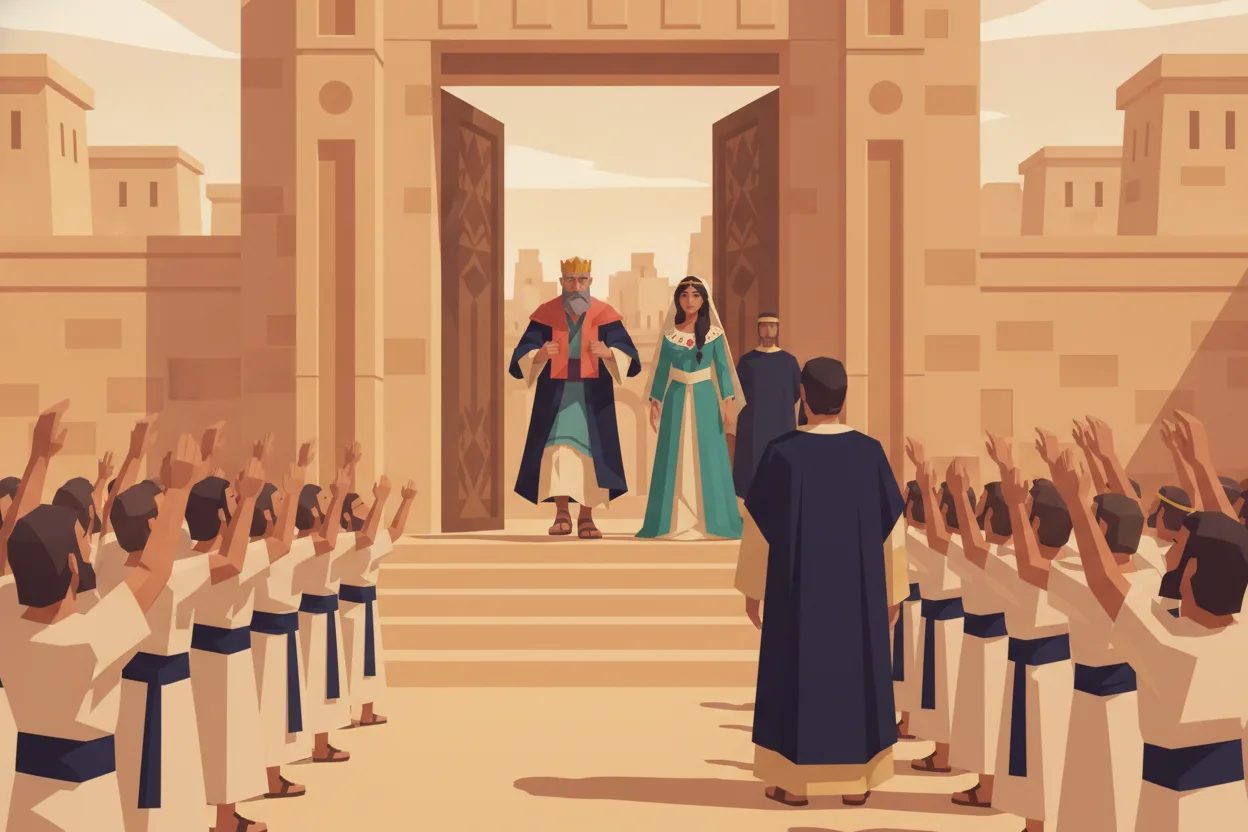
One problem remained: a decree of the king of Persia could never be revoked. Esther threw herself weeping at the king's feet. The king then gave his ring to Mordecai, who wrote a new decree: on the thirteenth of Adar, the Jews would have the right to gather and defend themselves.
Mordecai came out of the palace clothed in blue and white, a gold crown on his head. In the city of Susa there were shouts of joy. And the day that was to have been their undoing became the day of their deliverance.
Esther 9:20-22
The feast of Purim
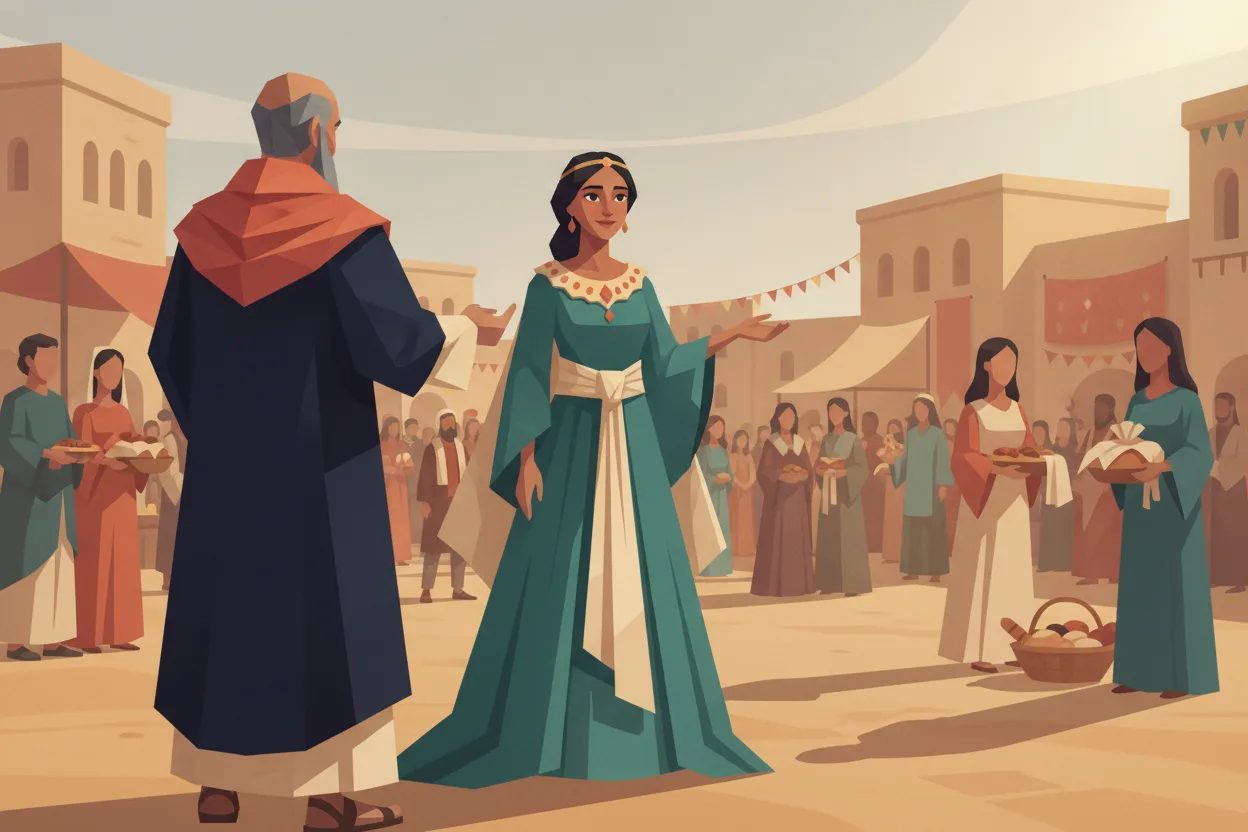
So that it would never be forgotten, Mordecai and Esther established a festival, every year, in the month of Adar. They called it Purim, from the word pur, the lots Haman had cast. On that day people eat, rejoice, send portions of food to one another, and give to the poor.
And down the centuries the story is still told of the little orphan who, at just the right moment, dared to walk in on the king.