Updated on

The key moments of the book, in order, one picture at a time.
Nehemiah 1:1-1
Nehemiah hears of Jerusalem's ruin
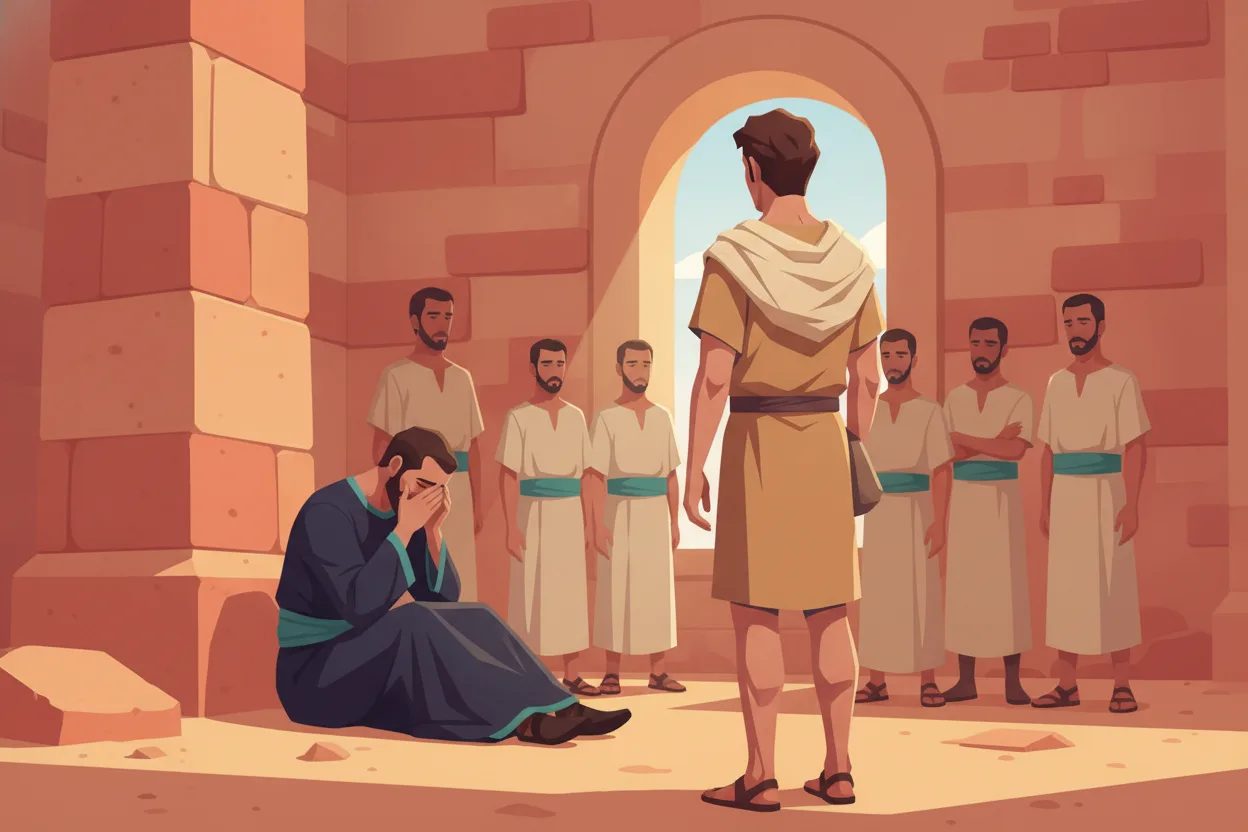
Nehemiah lives far from home, in the fortress of Susa. He serves the king of Persia, an important and comfortable job. But his heart stays turned toward Jerusalem, the city of his ancestors.
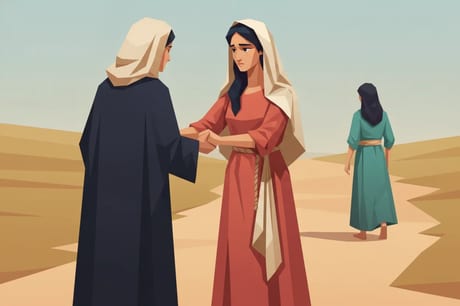
One day, his brother Hanani arrives with men from Judah. Nehemiah questions them at once about the city and about those who survived, those who returned from exile there.
The answer comes, harsh: "Those who remain are in trouble and disgrace. The walls of Jerusalem are broken down, and its gates are burned with fire."
These words strike Nehemiah to the heart. He thinks of his city without protection, exposed to shame before other nations.
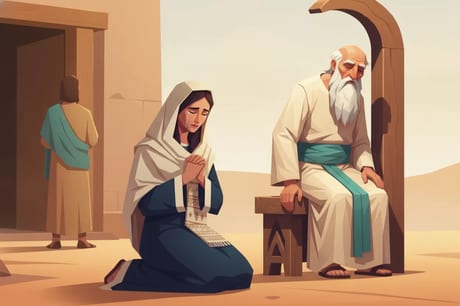
So he sits down, and he weeps. For several days, he stays in mourning. He fasts, he stops eating normally. And he prays, turned toward the God of heaven, already searching for what he could do.
Nehemiah 2:1-2
The king sends Nehemiah to Jerusalem
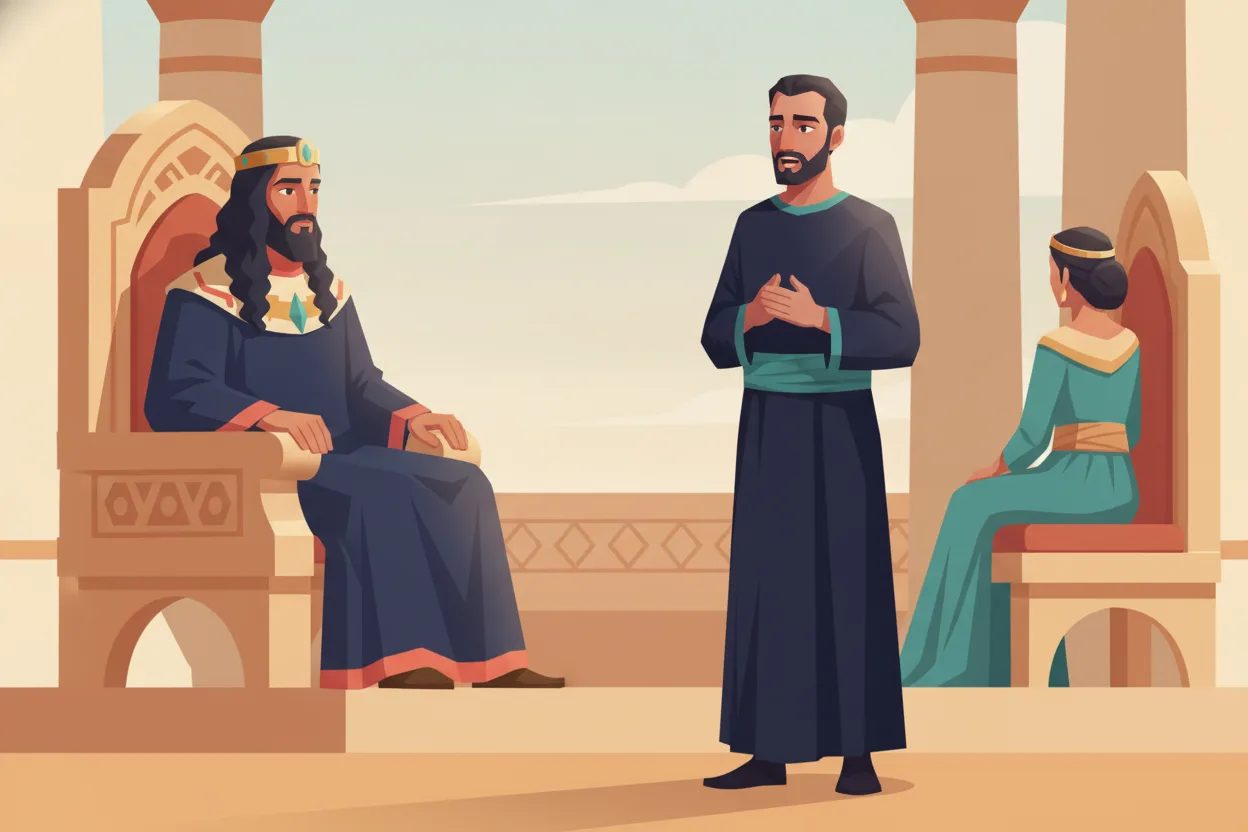
Nehemiah serves wine to King Artaxerxes, in Susa. One day, his face is sad. The king notices and asks, "Why is your face sad? You are not sick. This must be sadness of the heart." Nehemiah is afraid, but he answers, "May the king live forever! How could my face not be sad, when the city of my ancestors lies in ruins and its gates are burned?"
The king then asks, "What do you want?" Nehemiah prays silently, then dares to speak. He asks to go to Jerusalem to rebuild the city. The king agrees, with the queen sitting beside him. He sets a time for this journey.
Nehemiah also asks for letters for the governors of the regions, so he can travel safely, and a letter for Asaph, keeper of the royal forest, to get wood. The king grants everything, for the good hand of God is upon Nehemiah.
Nehemiah 2:11-2
Nehemiah inspects the walls by night
Nehemiah finally arrives in Jerusalem. He stays three days without telling anyone anything. He observes, he thinks, he prays again in silence.
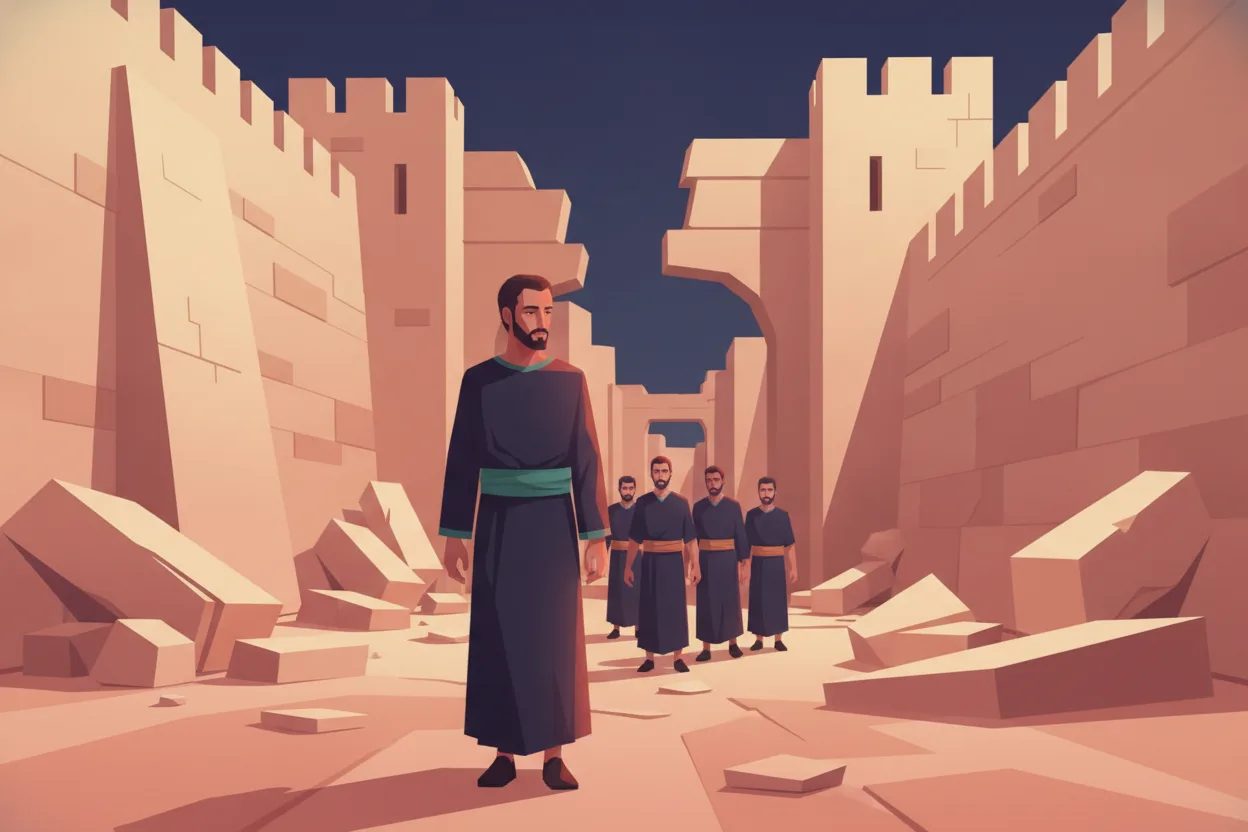
Then, one night, he gets up. He takes just a few men with him, no more. He mounts an animal and goes out through the valley, in the darkness. He wants to see the walls with his own eyes, without anyone yet knowing his plan.
He moves forward slowly. He looks at the broken stones, the gates burned by fire. In some places, the passage is so narrow that his mount can no longer pass. He gets down, he walks on foot, he keeps inspecting.
He returns before dawn, still in silence. Neither the priests, nor the leaders, nor the craftsmen know what he is preparing. Nehemiah keeps it all to himself. He wants to be sure of his plan before speaking to others.
Nehemiah 3:1-3
The people rebuild the wall section by section
Jerusalem is nothing but a heap of stones. Nehemiah has convinced the people to rebuild the walls. So everyone gets to work, each in his place.
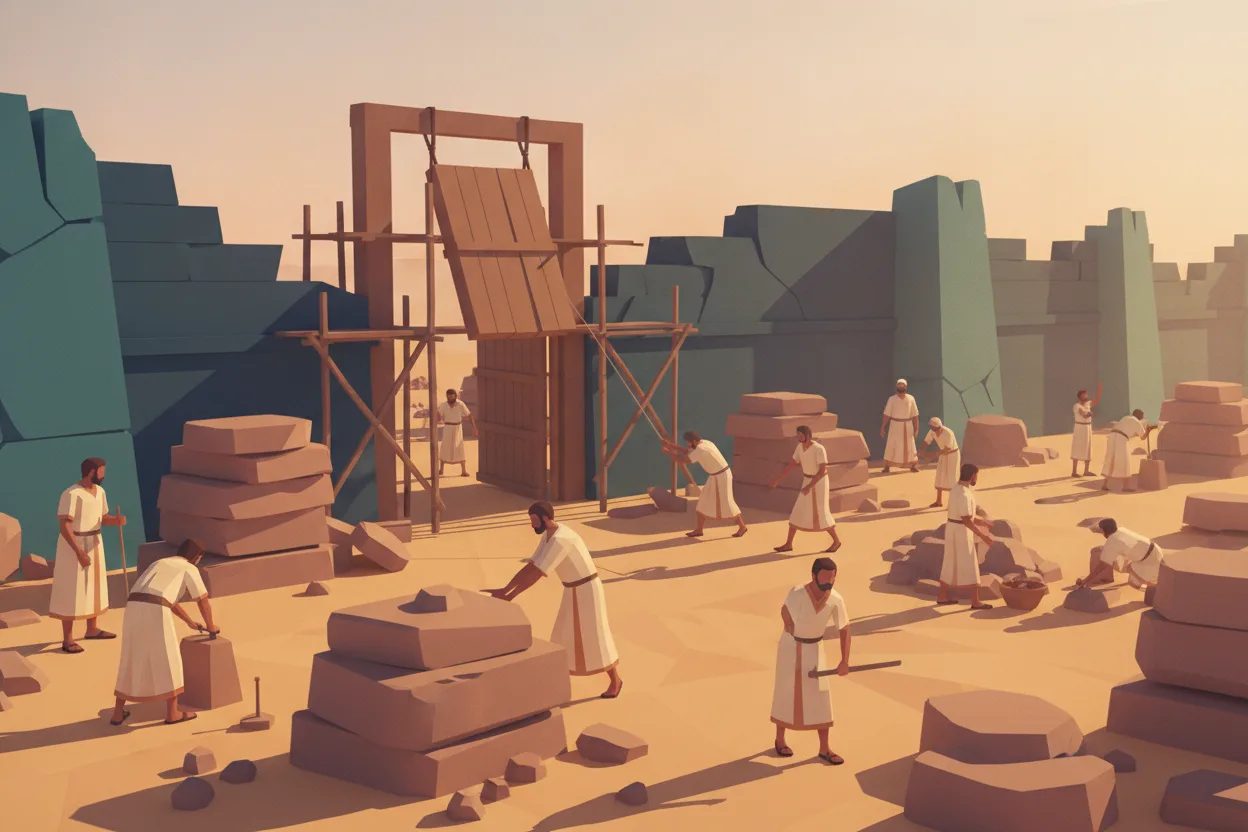
The high priest Eliashib begins with the Sheep Gate, with the other priests. Further on, the men of Jericho build their section of wall. The sons of Hassenaah set up the Fish Gate, with its doors, its bolts, and its bars. Each family repairs the wall right in front of its own house. Even women help, like the daughters of Shallum.
You can hear hammers, stones being stacked, orders given from one section to another. "You take this side, I'll take that one!" people often say. Different trades work side by side: goldsmiths, perfumers, merchants. No one is left out. Little by little, scaffolding covers the whole circuit of the city, and the wall comes back to life, section after section, until it closes completely.
Nehemiah 4:15-4
Builders work with weapons at hand
The enemies learn that Nehemiah knows their plan. So they back off, for now. But the threat does not really disappear. It stays there, like a black cloud over the construction site.
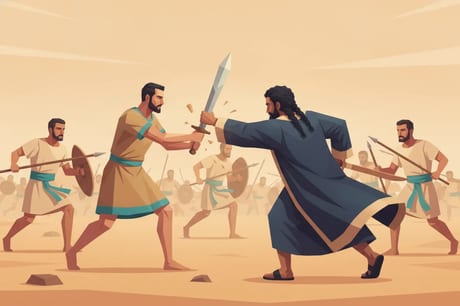
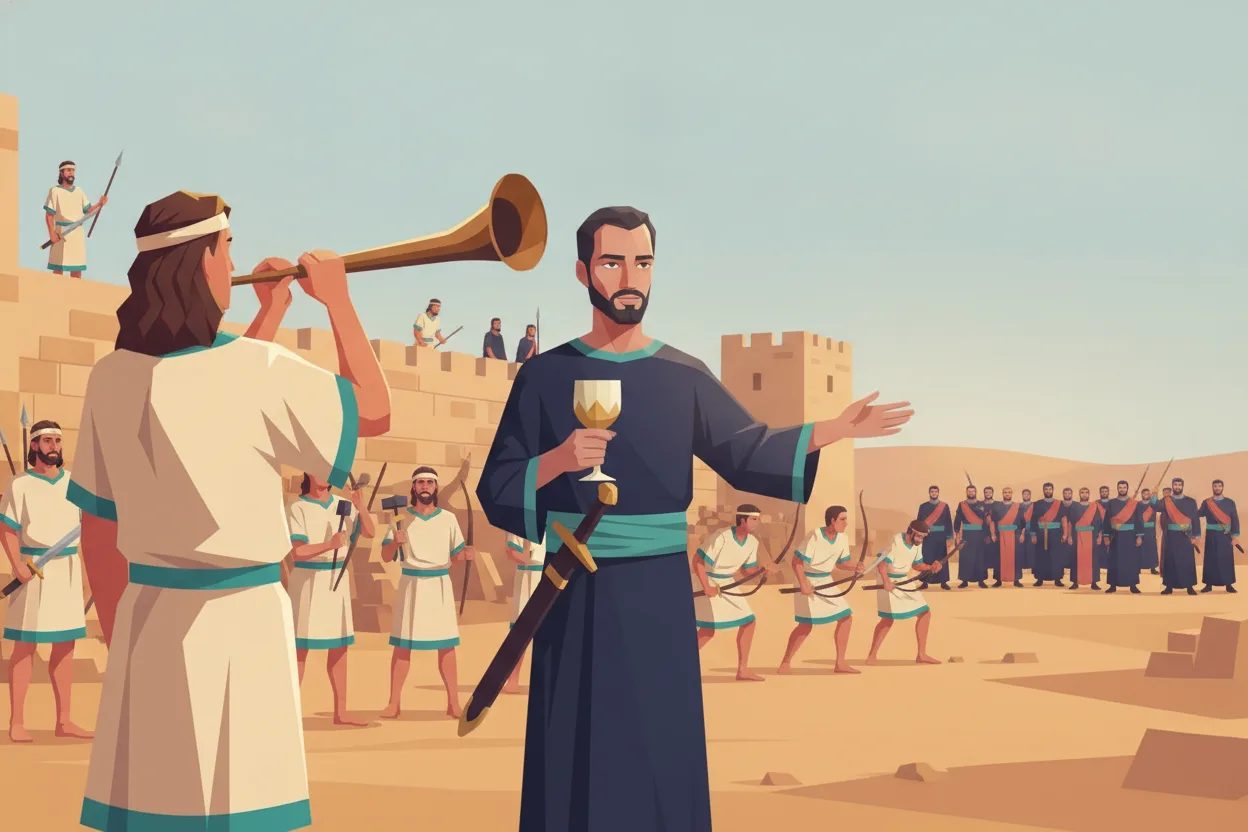
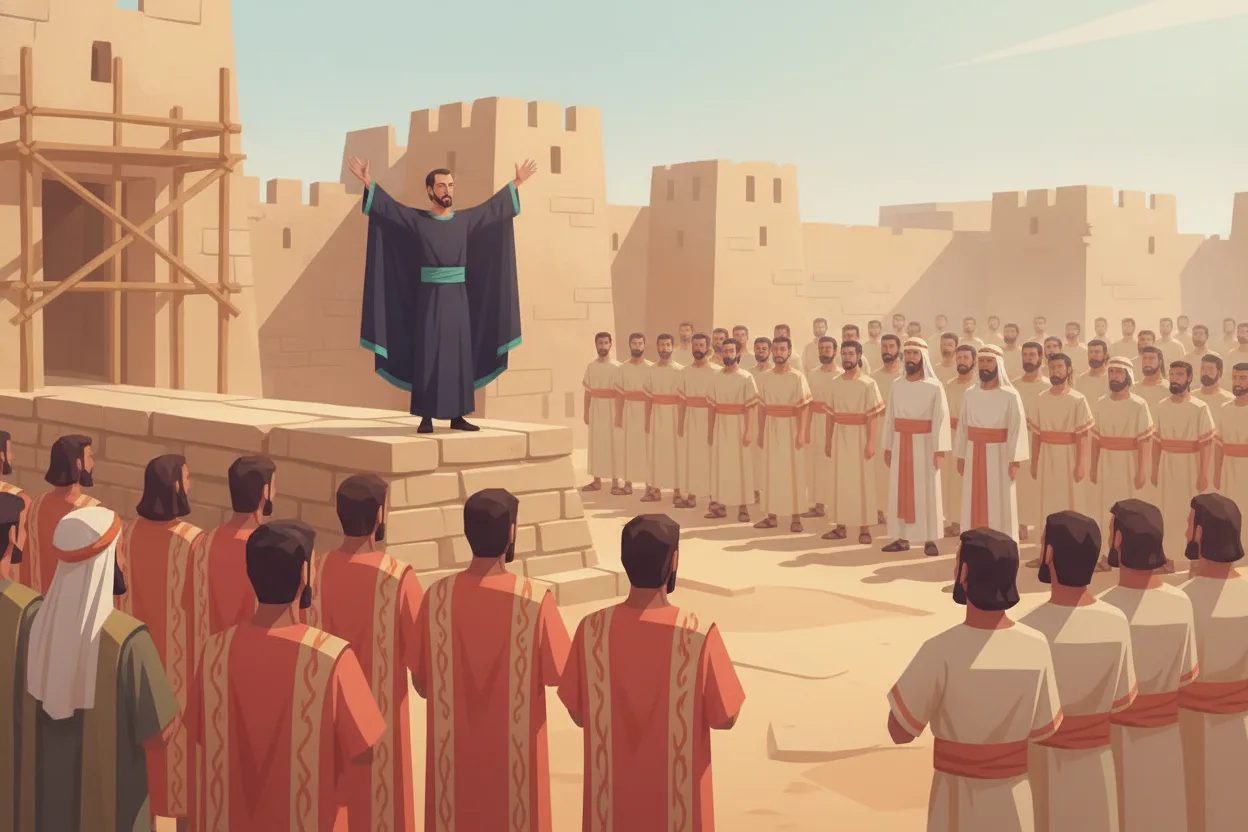
Nehemiah does not let his guard down. He organizes the work differently. Half the men build the wall, the other half hold spears, shields, and bows, ready to fight. The leaders stand behind all the people of Judah, to encourage and watch over them.
The builders work with one hand, and with the other hand they hold a weapon. Each one keeps his sword strapped to his side, even while laying stones. A man blows a trumpet beside Nehemiah, ready to sound the alarm. The people never stop, despite the fear. They build and they watch, day after day, without rest.
Nehemiah 5:1-5
Nehemiah confronts the nobles over debts
While the walls rise, a cry breaks out among the people. Poor families have nothing left to eat. Others have had to sell their fields to buy grain. Others still have borrowed money from the rich, and now they must give their own children as slaves to pay their debts.
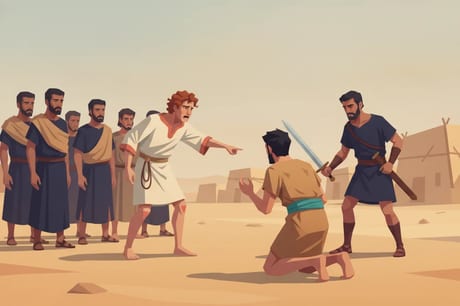
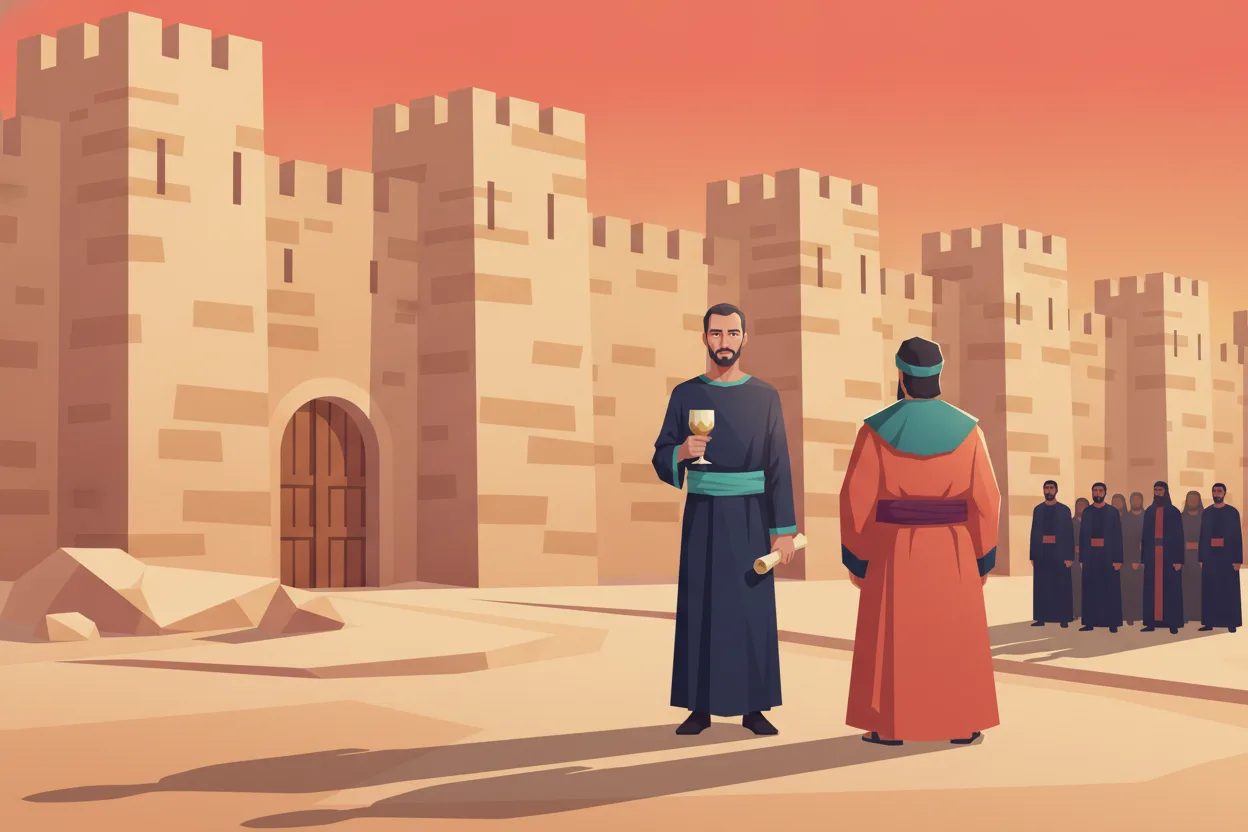
Nehemiah hears these complaints and becomes angry. He summons the rich and the leaders of the people. He tells them, "You lend money to your brothers, and you charge them interest! This is not right. Give back their fields, their houses, and the money you have overcharged them."
The rich agree, before the priests. Nehemiah shakes out his garment and says, "So may God shake out every man who does not keep this promise!" All the people answer, "Amen!" And each one gives back what he owed.
Nehemiah 6:15-6
The wall is finished in 52 days
The work draws to a close. Nehemiah looks at the aligned stones, the gates set in place, the complete wall. Fifty-two days have passed since the work began. The workers lay down their tools. The city of Jerusalem once again has a solid wall all around it.
The news spreads quickly among the enemies. Sanballat, Tobiah, and the other neighboring peoples learn that the wall is finished. They are left speechless. They thought this project would fail, worn down by mockery and threats.
But they understand something else. This wall did not come from strength of arms alone. They see that God himself has supported this people. Fear grips them. Their confidence falls. They lower their eyes before what they can no longer deny: the God of Israel has acted with his people, and no one could stop it.
Nehemiah 8:1-8
Ezra reads the Law before the assembly
The walls of Jerusalem are finally rebuilt. All the people gather in a great square, in front of the Water Gate. They ask Ezra, the priest, to bring the book of the law of Moses.
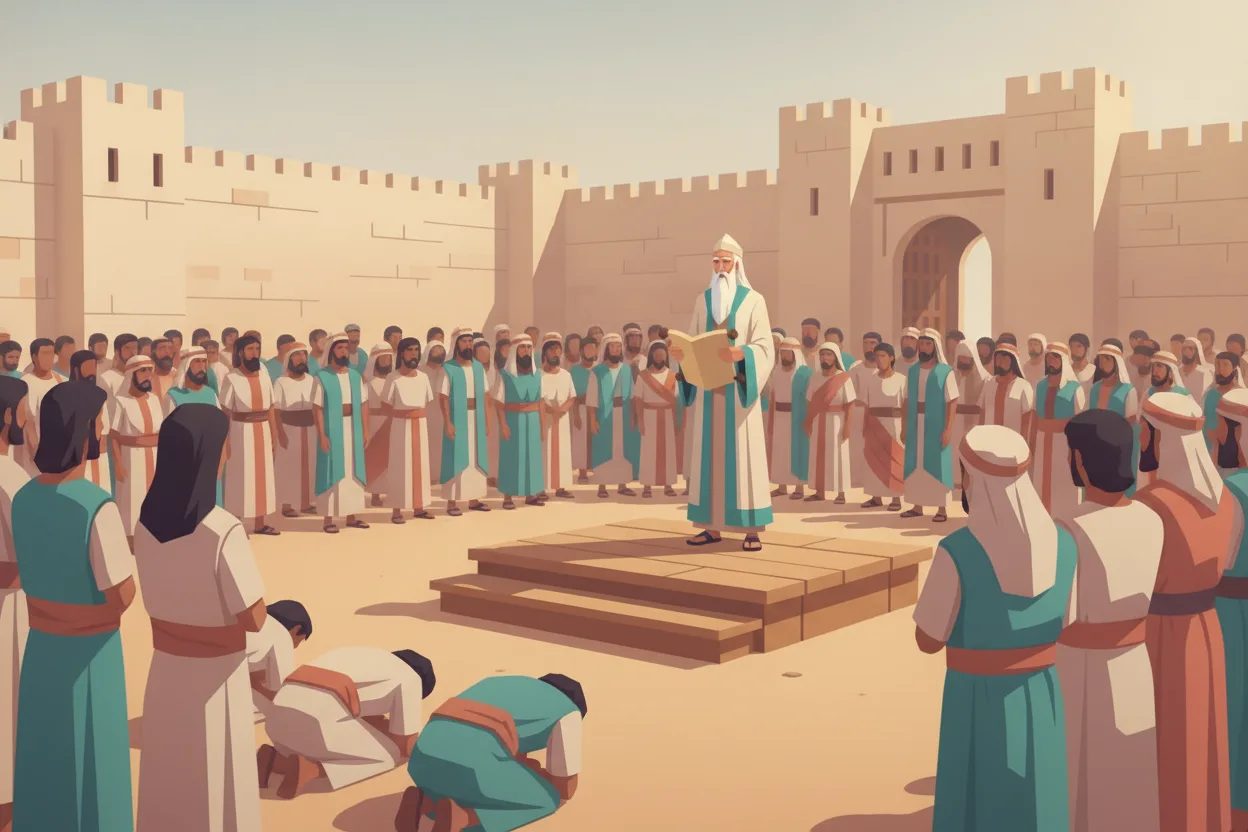
Ezra climbs onto a wooden platform, built for the occasion. As soon as he opens the book, everyone stands up. He blesses the Lord, and the people answer, "Amen! Amen!" Then they bow down, faces to the ground.
Ezra reads aloud, from morning until midday. Levites move among the crowd. They explain the text, sentence by sentence, so that everyone truly understands what is written. The people listen attentively. Some weep, moved by these words rediscovered after so many years of neglect. That day, the Word becomes alive again for a whole people.
Nehemiah 8:14-8
The people celebrate the Feast of Booths
The people are still listening to the reading of the Law. Suddenly, the leaders discover a text forgotten for a long time. Moses had asked them to build shelters of branches during an autumn feast, to remember the wilderness. No one had done this for generations.
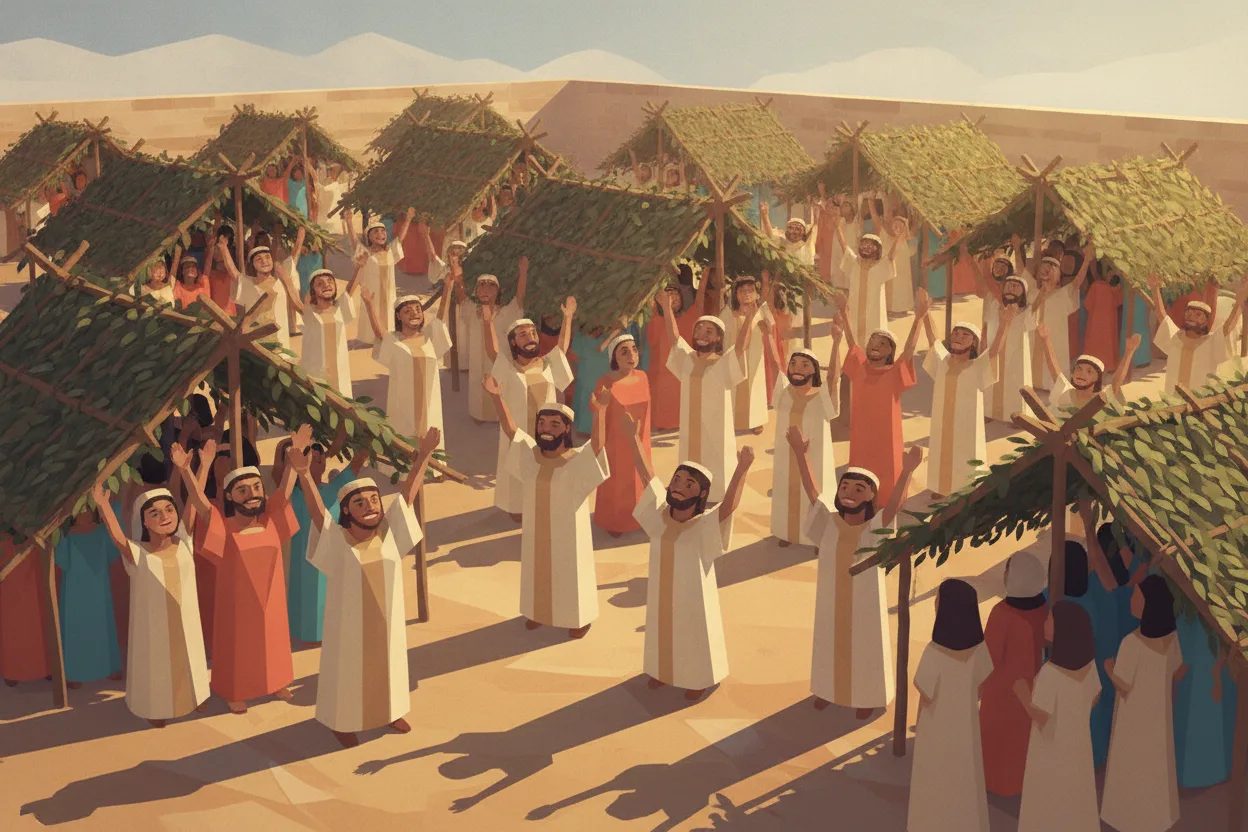
So an order goes out to all the towns, as far as Jerusalem: "Go and gather olive branches, myrtle, palm, and build shelters!" The people obey with joy. On rooftops, in the courtyards of houses, in the courtyard of the Temple, shelters of branches appear everywhere.
For seven days, the whole community lives this way, outside, under the branches. Each day, the Law of God is read aloud. On the last day, a great assembly brings everyone together. Immense joy fills the city. Since the time of Joshua son of Nun, no one had celebrated this feast in this way.
Nehemiah 12:27-12
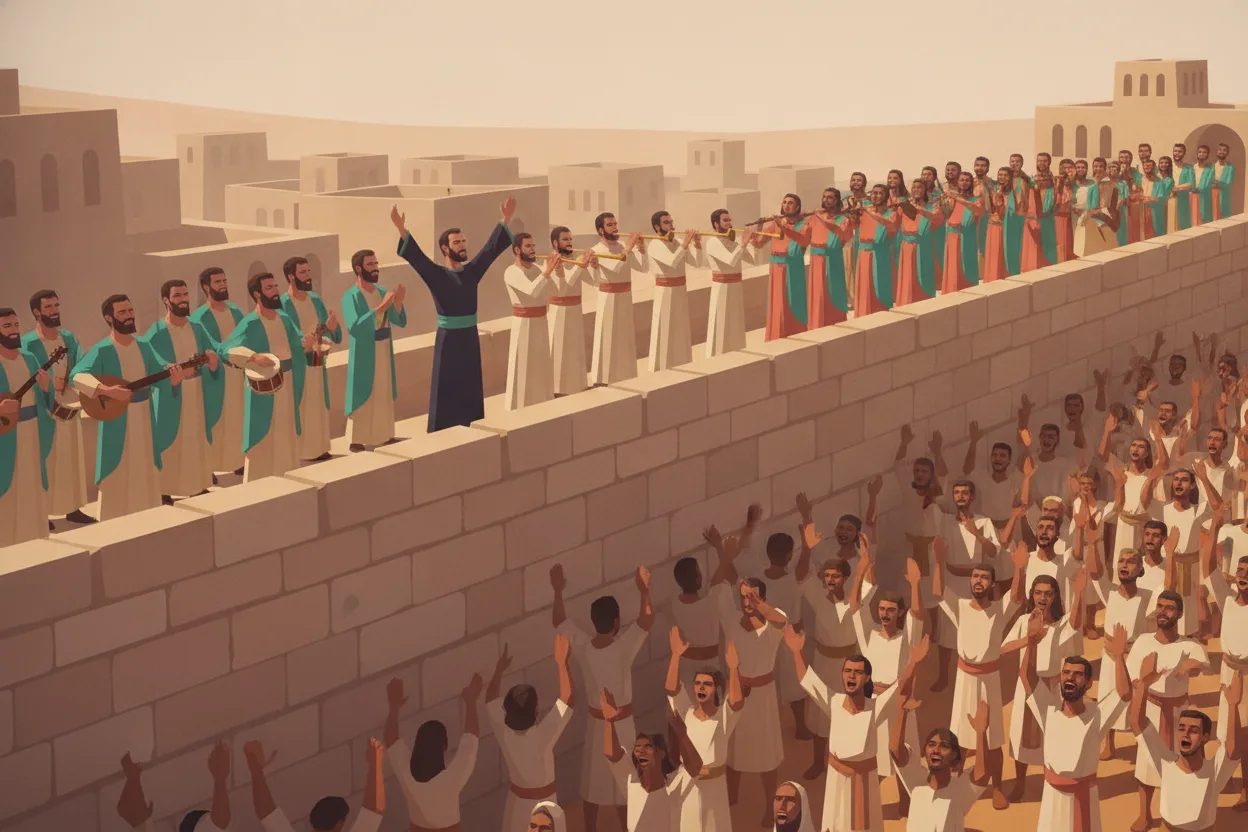
Dedication of the wall with singing and procession
The walls of Jerusalem are finally raised up. Nehemiah wants to celebrate this properly. He brings in the Levites from all the surrounding villages, with their cymbals, their lutes, and their harps. Singers are also sought out so that joy can burst forth in music.
Nehemiah forms two great choirs. Each one climbs onto the wall, in an opposite direction, and they walk slowly, singing and playing, until they meet in front of the house of God. The priests blow the trumpets. You can hear shouts of, "Thank you, Lord!" The whole city rings with music and cries of joy.
Then comes the time for offerings. Each one brings bread, wine, oil, in thanksgiving. The children are there too, with their wives and husbands. All the people rejoice together, so loudly that the joy of Jerusalem can be heard far away, even in the neighboring towns. That day, no one stays away from the celebration.