Alexander, son of Antiochus Epiphanes, takes Ptolemais, and he and Demetrius both court Jonathan. Demetrius returns the hostages; Jonathan settles in Jerusalem and rebuilds the walls. Alexander outbids him, naming Jonathan high priest and the king's friend with a purple robe and a crown of gold, and at the feast of tabernacles in the 160th year Jonathan puts on the holy robe. Demetrius promises sweeping tax releases, but the Jews do not trust him, and he is slain in battle. At Alexander's wedding to Cleopatra, Jonathan is clothed in purple. He then defeats Apollonius, general of the younger Demetrius, wins Joppa and burns Azotus with the temple of Dagon.
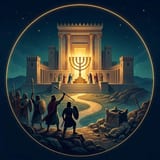
1 Maccabees 10 - Summary
Summary
Read 1 Maccabees Chapter 10 Summary
Original
Characters in This Chapter
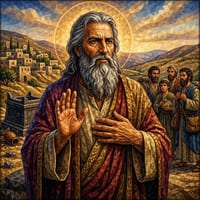
Mattathias
Priest of Modin who refuses to sacrifice to idols, launches the revolt and on his deathbed names Judas captain
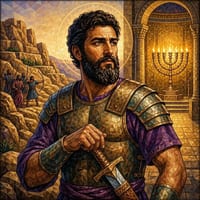
Judas Maccabeus
Son of Mattathias and leader of the revolt, who wins at Emmaus, rededicates the Temple and falls at Eleasa
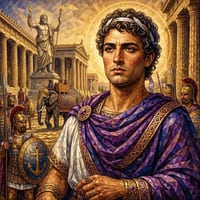
Antiochus IV Epiphanes
Seleucid king who plunders the Temple, outlaws the law and sets up the abomination of desolation, then dies in Persia

Jonathan
Faithful Friend of David
Places in This Chapter

Jerusalem
View on MapCity plundered and garrisoned by Antiochus, won back by Judas, rebuilt by Jonathan and freed of its Syrian tower by Simon

The Temple
View on MapSanctuary profaned by the abomination of desolation in the 145th year and rededicated by Judas three years later to the day
Modin
View on MapTown of Mattathias, where the revolt begins and where the family is buried under Simon's monument

Antioch (Syria)
View on MapRoyal city of the Seleucid kings, from which the armies set out, and where Jonathan's soldiers save Demetrius from a rising

Judea
View on MapJudea was the southern region of Israel, centered on Jerusalem. It was the heart of the ancient kingdom of Judah. Jesus was born in Bethlehem of Judea, was crucified in Jerusalem, and the early church spread from Judea to the ends of the earth.

Samaria
View on MapSamaria was the capital of the northern kingdom of Israel and later became the name for the entire region between Judea and Galilee. After the Assyrian conquest, the population became mixed, and the Samaritans developed their own form of worship. Jews and Samaritans had deep hostility. Jesus broke social barriers by speaking with the Samaritan woman at the well and telling the parable of the Good Samaritan.

Galilee
View on MapGalilee was a region in northern Israel where Jesus grew up and conducted much of His ministry. Jesus called His first disciples here, performed many miracles, and taught large crowds. After His resurrection, Jesus met His disciples in Galilee and commissioned them to make disciples of all nations.

Egypt
View on MapEgypt plays a significant role throughout the Bible, from the time of Abraham to the flight of the Holy Family. Joseph was sold into slavery there and rose to become second to Pharaoh, saving his family during famine. The Israelites were enslaved in Egypt for 400 years before God delivered them through Moses in the Exodus. Jesus' family fled to Egypt to escape King Herod, fulfilling the prophecy "Out of Egypt I called my son."

Crete
View on MapCrete is a large Mediterranean island where Paul left Titus to establish church leadership. The island had a reputation for moral laxity, which Paul references when quoting a Cretan prophet. Paul's ship also passed by Crete during his voyage to Rome before being caught in the storm that led to the shipwreck on Malta.

Antioch
View on MapAntioch in Syria was the third largest city in the Roman Empire and became a major center of early Christianity. It was here that believers were first called "Christians." The church at Antioch sent Paul and Barnabas on their first missionary journey. The city was known for its diverse population of Jews and Gentiles worshipping together.
Position in Book
Persecution under AntiochusChapters 1
Mattathias Takes a StandChapters 2
Judas and the RededicationChapters 3-4
Wars Around JudeaChapters 5-6
Nicanor's Day and the Roman AllianceChapters 7-8
The Death of Judas and the Rise of JonathanChapters 9-12
Judas falls at Eleasa; Jonathan survives in the wilderness, becomes high priest between rival kings, and is taken by Tryphon's treachery at Ptolemais.
Simon and IndependenceChapters 13-14
Simon's Last YearsChapters 15-16