Judas Maccabeus takes his father's place, 'like a lion's whelp roaring for his prey'. He kills Apollonius and keeps his sword, then routs Seron at the going up of Bethhoron with a small company faint from fasting, telling them that 'strength cometh from heaven'. Short of money, Antiochus leaves for Persia and puts Lysias in charge, with orders to root out Judea. Lysias sends Ptolemee, Nicanor and Gorgias with forty thousand footmen and seven thousand horsemen; they camp by Emmaus, and merchants arrive to buy Israelites as slaves. Judas gathers the people at Maspha to fast and pray, sends home those the law exempts, and makes ready.
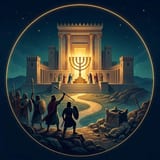
1 Maccabees 3 - Summary
Summary
Read 1 Maccabees Chapter 3 Summary
Original
Characters in This Chapter
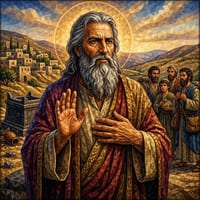
Mattathias
Priest of Modin who refuses to sacrifice to idols, launches the revolt and on his deathbed names Judas captain
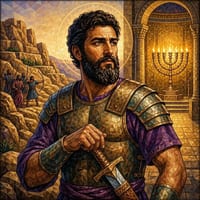
Judas Maccabeus
Son of Mattathias and leader of the revolt, who wins at Emmaus, rededicates the Temple and falls at Eleasa
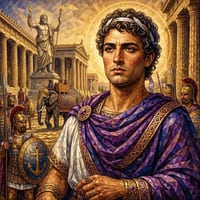
Antiochus IV Epiphanes
Seleucid king who plunders the Temple, outlaws the law and sets up the abomination of desolation, then dies in Persia

Jacob
Father of the Twelve Tribes of Israel

Lot
Nephew of Abraham
Places in This Chapter

Jerusalem
View on MapCity plundered and garrisoned by Antiochus, won back by Judas, rebuilt by Jonathan and freed of its Syrian tower by Simon

The Temple
View on MapSanctuary profaned by the abomination of desolation in the 145th year and rededicated by Judas three years later to the day
Modin
View on MapTown of Mattathias, where the revolt begins and where the family is buried under Simon's monument

Antioch (Syria)
View on MapRoyal city of the Seleucid kings, from which the armies set out, and where Jonathan's soldiers save Demetrius from a rising

Samaria
View on MapSamaria was the capital of the northern kingdom of Israel and later became the name for the entire region between Judea and Galilee. After the Assyrian conquest, the population became mixed, and the Samaritans developed their own form of worship. Jews and Samaritans had deep hostility. Jesus broke social barriers by speaking with the Samaritan woman at the well and telling the parable of the Good Samaritan.

Persia
View on MapPersia (modern Iran) was a major empire that conquered Babylon and allowed the Jews to return to Jerusalem. King Cyrus issued the decree permitting the temple's reconstruction. The books of Esther and Daniel are set partly in the Persian court. Nehemiah served as cupbearer to the Persian king Artaxerxes before returning to rebuild Jerusalem's walls.

Egypt
View on MapEgypt plays a significant role throughout the Bible, from the time of Abraham to the flight of the Holy Family. Joseph was sold into slavery there and rose to become second to Pharaoh, saving his family during famine. The Israelites were enslaved in Egypt for 400 years before God delivered them through Moses in the Exodus. Jesus' family fled to Egypt to escape King Herod, fulfilling the prophecy "Out of Egypt I called my son."

Antioch
View on MapAntioch in Syria was the third largest city in the Roman Empire and became a major center of early Christianity. It was here that believers were first called "Christians." The church at Antioch sent Paul and Barnabas on their first missionary journey. The city was known for its diverse population of Jews and Gentiles worshipping together.

Emmaus
View on MapA village about sixty stadia from Jerusalem where two disciples walked on the evening of the resurrection. A stranger joined them and opened the Scriptures along the road; they knew him only when he broke the bread, and he vanished. Several sites claim the name; this marker follows the distance Luke gives.

The Wilderness
View on MapThe wilderness refers to the desert regions of Sinai and Judea. Israel wandered here for 40 years after the Exodus. John the Baptist preached in the wilderness of Judea, and Jesus was tempted by Satan in the wilderness for 40 days. It represents testing, preparation, and encounter with God.
Position in Book
Persecution under AntiochusChapters 1
Mattathias Takes a StandChapters 2
Judas and the RededicationChapters 3-4
Judas defeats Apollonius, Seron, Gorgias and Lysias, cleanses the sanctuary and dedicates the new altar on the twenty-fifth of Casleu.
Wars Around JudeaChapters 5-6
Nicanor's Day and the Roman AllianceChapters 7-8
The Death of Judas and the Rise of JonathanChapters 9-12
Simon and IndependenceChapters 13-14
Simon's Last YearsChapters 15-16