Updated on
Bethulia City
About Bethulia
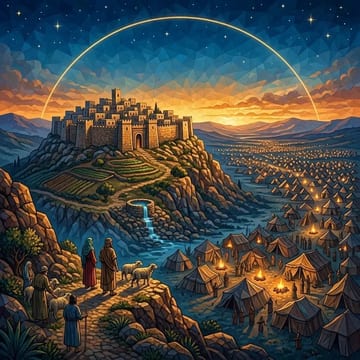
Bethulia is the Israelite hill town at the centre of the book of Judith, guarding the passes toward Judea near Dothaim and the plain of Esdraelon. Besieged by Holofernes and cut off from its springs, it was about to surrender when Judith went down to the Assyrian camp and returned with the general's head. Its site is unknown: it is commonly placed in the hills of Samaria near Dothan, and the position shown on the map is only approximate.

History of Bethulia
Achior ReceivedUndated
Achior the Ammonite, left bound at the foot of the hill by Holofernes' servants, is brought into the town and received by Ozias.
JDT 6:10-21Siege and ThirstUndated
The Assyrian army camps in the valley, seizes the springs, and after thirty-four days the town's cisterns run dry.
JDT 7:1-22Five DaysUndated
The people cry for surrender; Ozias persuades them to hold out five more days for God's mercy.
JDT 7:23-32Judith's RebukeUndated
Judith summons the elders, reproaches them for tempting God and announces that she will act before the five days are over.
JDT 8:9-36The Head on the WallUndated
Judith returns by night with Holofernes' head; it is hung on the walls, and at dawn the men of Bethulia go out against the camp.
JDT 14:1-11The Enemy FleesUndated
The leaderless Assyrians flee, those camped in the mountains around Bethulia with them, and Israel pursues them.
JDT 15:1-7Judith's TombUndated
Judith ends her days in Bethulia and is buried there in the cave of her husband Manasses.
JDT 16:21-25
Notable Characters in Bethulia


Locations Related to Bethulia


Biblical Significance of Bethulia
Bethulia is the setting of almost the whole book of Judith: a small hill town guarding the passes toward Judea and Jerusalem. Besieged and cut off from its springs, it is ready to surrender when Judith goes down to the enemy camp and returns with the head of Holofernes. The town is otherwise unknown, and its site has never been identified with certainty; scholars generally place it in the hills of Samaria, south of the plain of Esdraelon near Dothan, and some read the name as symbolic. Its role in the story is to show that God saves a weak and nameless place through faith.
Frequently Asked Questions
Latest from the Blog
Fresh reflections on faith and Scripture
The Manager Mindset: Why You Don't Actually Own Anything
What if the money in your bank account isn't really yours? Shifting from ownership to stewardship transforms how we work, spend, and find contentment. When we see ourselves as managers of God's resources rather than owners, everything changes.
Read more
Cracking the Color Code: What the Hues of Revelation Really Mean
The Book of Revelation isn't just filled with beasts and trumpets. It's painted in a deliberate palette where every color carries weight. From white robes to scarlet dragons, understanding these visual symbols unlocks layers of meaning John embedded in his apocalyptic vision.
Read more
Why Genesis Leaves So Many Questions Unanswered
Genesis opens the Bible with creation, but it doesn't tell us everything we want to know about origins. The gaps in the narrative aren't oversights but intentional choices that shape how we approach faith, science, and the biggest questions of existence.
Read more