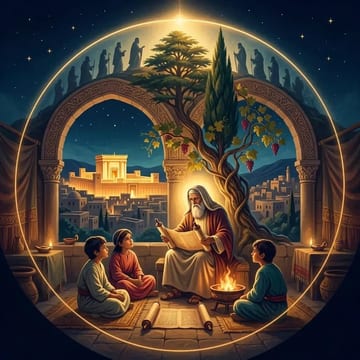
Book of Sirach Sirach, written by Jesus son of Sirach (Ben Sira), a scribe of Jerusalem
Create a PlanEcclesiasticus, or the Wisdom of Jesus son of Sirach, is the longest wisdom book of the Bible, written by a Jerusalem scribe around 180 BC. In fifty-one chapters of proverbs, poems and prayers, it teaches that all wisdom comes from the Lord and begins with fearing him, and it applies that wisdom to daily life: honouring parents, choosing friends, guarding the tongue, giving alms, lending, eating and drinking with measure, and facing death. At its centre, Wisdom herself speaks and is identified with the law of Moses; at its close, the Praise of the Fathers retells Israel's history from Enoch to the high priest Simon.
Chapters in Sirach
Outline of Sirach
All wisdom comes from the Lord and begins with fearing him; whoever serves him must prepare for trial and trust his mercy.
Honour of father and mother, humility, generosity to the needy, and the hard schooling by which wisdom trains her children.
Warnings against presumption and the double tongue, the portrait of the faithful friend, and prudence toward the powerful, women and strangers.
Rulers and the pride that topples them, the God who raises the lowly, discernment in giving, the danger of rich company, and the miser's folly.
Man is free to choose life or death; God judges the wicked, created man in his image, chose Israel, and is patient with all flesh.
Gossip, silence, lies and oaths, the contrast between the wise man and the fool, and a prayer for the discipline of the mouth and of desire.
Wisdom comes from the mouth of the Most High, makes her dwelling in Israel and is identified with the law given through Moses.
What makes a household happy or miserable, with the good wife praised and the wicked wife bitterly described.
Sin in trade, betrayed secrets, forgiveness of one's neighbour, the backbiting tongue, lending and surety, raising sons, health, money, banquets and wine.
God sets all things in pairs; dreams are vain; sacrifice from unjust gain is rejected; the prayer of the humble pierces the clouds; Israel's deliverance is begged.
Choosing counsel, honouring the physician, mourning the dead, the value of the trades, and the scribe's vocation, ending in a hymn to God's works.
The burdens of human life, the sentence of death, true and false shame, a father's care for his daughter, and a great hymn to sun, moon, stars and weather.
The author thanks God for deliverance from slander and death, tells how he sought wisdom from his youth, and invites the unlearned to his school.
Key Themes in Sirach
The Fear of the Lord
The book's first and last word on wisdom: fearing God is its beginning, root, crown and fulness, and nothing ranks above the man who fears the Lord.
Wisdom and the Law
Wisdom, created before all things, seeks a home and settles in Israel; chapter 24 identifies her with the book of the covenant, so that keeping the commandments is the way to become wise.
The Tongue and Friendship
No subject returns more often than speech: gossip, oaths, lies, flattery and betrayed secrets, set against the faithful friend who is 'the medicine of life'.
Riches, Poverty and Alms
Sirach warns against trusting riches and against unjust gain, defends the poor, praises lending and almsgiving, and teaches that God hears the cry of the widow and the orphan.
Israel's History as Praise
The Praise of the Fathers turns history into a hymn, showing God's faithfulness through the patriarchs, priests, kings and prophets down to the author's own day.
Key Verses in Sirach
To fear the Lord is the beginning of wisdom: and it was created with the faithful in the womb.
The book's motto, echoing Proverbs: wisdom starts with reverence for God, and is given even before birth to the faithful.
My son, if thou come to serve the Lord, prepare thy soul for temptation.
The opening of the first instruction: serving God does not spare a person from trial, it prepares him for it.
I came out of the mouth of the most High, and covered the earth as a cloud.
Wisdom describes her origin in God's own word, a passage the early Church read alongside the prologue of John.
Forgive thy neighbour the hurt that he hath done unto thee, so shall thy sins also be forgiven when thou prayest.
Forgiving others and being forgiven by God are tied together, two centuries before the Lord's Prayer.
Let us now praise famous men, and our fathers that begat us.
The opening of the Praise of the Fathers, still read at memorials and funerals.
Characters in Sirach

Found perfect and righteous, kept as a remnant when the flood came, with an everlasting covenant

Father of many nations, faithful when tested, to whom God swore to bless the nations in his seed

Beloved of God and men, brought into the cloud and given the law of life; the law he commanded is identified with Wisdom

Given an everlasting priesthood; his vestments are described at length

Chosen out of Israel, slayer of Goliath, singer who set singers before the altar, given a covenant of kings

Wise king of peace who built the temple, then stained his honour through his women

Prophet 'as fire', taken up in a chariot of fire and appointed to turn the heart of the father to the son

Author and sage of Jerusalem, who signs the book, praises the fathers and closes with his own prayer
Locations in Sirach


Christ in Sirach
Wisdom Pitches Her Tent
Wisdom comes from the mouth of the Most High and is told to pitch her tent in Jacob; John says the Word became flesh and dwelt, literally 'tabernacled', among us.
JHN 1:14Come to Me and Take the Yoke
Wisdom calls 'Come unto me', and the author invites the unlearned to put their neck under her yoke and find rest; Jesus uses the same words of himself.
MAT 11:28-30Forgive to Be Forgiven
Sirach asks how a man who keeps anger against his neighbour can seek pardon from God; Jesus makes the same link in the Lord's Prayer and the words that follow it.
MAT 6:12-15The Rich Man Who Says He Has Rest
The miser who says 'now I will eat of my goods', not knowing he must die and leave them to others, reappears in the parable of the rich fool.
LUK 12:16-21Frequently Asked Questions
You are readingKing James Version